Key facts
The MTCR (Missile Technology Control Regime) is a 35-nation export coordination arrangement that divides controlled items into Category I (complete systems with 500+ kg/300+ km capability, presumed denied) and Category II (dual-use components subject to case-by-case licensing review).
Source · https://www.state.gov/bureau-of-international-security-and-nonproliferation/releases/2025/01/missile-technology-control-regime-mtcr-frequently-asked-questions
The HUUVER project (Horizon 2020, grant #870236), coordinated by Cervi Robotics (Dronehub), received €1,197,216.25 in EU funding to develop a hybrid UAV-UGV system, per CORDIS.
Source · https://cordis.europa.eu/project/id/870236
In September 2025, the US State Department reclassified advanced military drones under 'crewed aircraft' export policy rather than 'missiles,' streamlining allied sales while maintaining end-use controls.
Source · https://www.cmtradelaw.com/2025/09/department-of-state-issues-final-rule-effective-sept-15-2025-updating-itar-and-targeted-revisions-to-the-u-s-munitions-list/
2 more key facts
The FY2026 NDAA expanded DoD counter-UAS authorities, emphasizing autonomous detection and tracking of hostile drones for defensive airspace and critical infrastructure protection.
Source · https://dronelife.com/2025/12/09/ndaa-fy-2026-key-counter-uas-provisions-explained/
Dronehub participated in AUDROS, an ESA- and EDA-supported project exploring counter-UAS and dual-use autonomous systems.
Source · ESA.int / EDA.europa.eu
In this piece
Dual-use technology refers to equipment, systems, or materials capable of both civilian and military application. The MTCR (Missile Technology Control Regime)—a 35-nation export coordination framework—divides controlled items into Category I (complete systems capable of delivering 500+ kg payloads over 300+ km range, presumed denied) and Category II (components like guidance systems, sensors, and propellants subject to case-by-case export review). The distinction is not the hardware itself, but intended use, operational envelope, and proximity to weaponization risk.
When foreign governments or US defense evaluators hear "Dronehub," they often ask: Is this a weapons company? The answer is no—but it requires precision about what "dual-use" actually means and where the regulatory line sits.
Defining Dual-Use Precisely
The term "dual-use technology" carries weight in export control and defense policy. It describes equipment, systems, or materials that serve both civilian and military applications—not weapons themselves, but infrastructure that could be relevant to both sectors.
The Missile Technology Control Regime (MTCR), a 35-nation multilateral export coordination arrangement, divides controlled items into two categories:
- Category I: Complete unmanned aerial vehicle systems capable of delivering 500+ kg payloads over 300+ km range. These face an unconditional presumption of denial and export only in rare cases.
- Category II (Dual-Use): Components and technologies applicable to both civil and military domains—propellants, test equipment, flight instruments, guidance subsystems, sensors. Export requires case-by-case review and licensing.
The MTCR's Category II framework is explicit: the drone itself is not the issue. The issue is whether the technology, once transferred, could enable hostile actors to develop long-range strike systems or enter uncontrolled proliferation chains.
Infrastructure Defense ≠ Weaponization
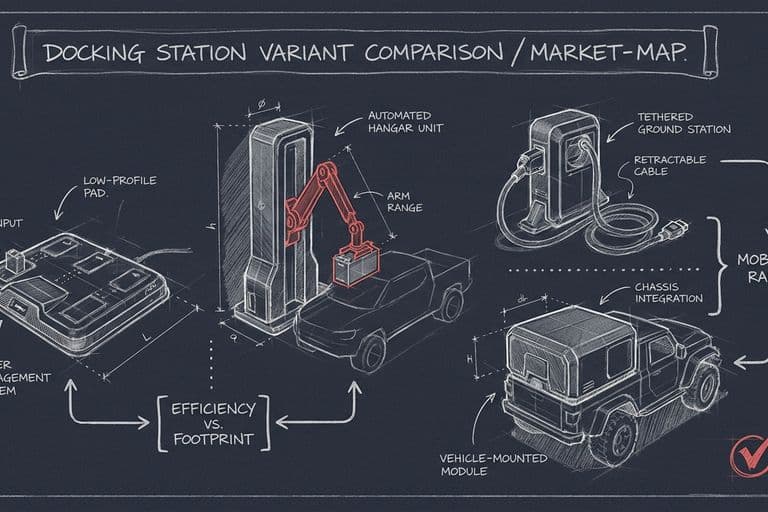
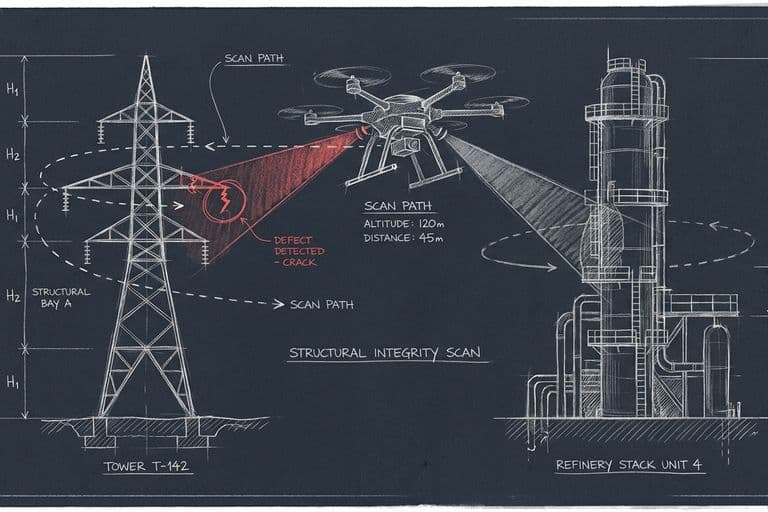
I work in autonomous sensing and infrastructure resilience. Dronehub operates drone-in-a-box systems that autonomously inspect power lines, railways, and refineries. These systems are dual-use in the regulatory sense—they employ autonomous flight, machine vision, and sensor fusion—but they are not weapons.
Here's why the distinction matters:
Power Grid Monitoring: Autonomous drones detect thermal anomalies, voltage imbalances, and structural damage in transmission equipment. They lift from substations, follow predetermined GPS routes, stream multimodal sensor feeds (infrared, RF, acoustic) to command centers, and generate work orders—all without human pilot intervention. The goal is preventing cascading grid failures, not strike capability.
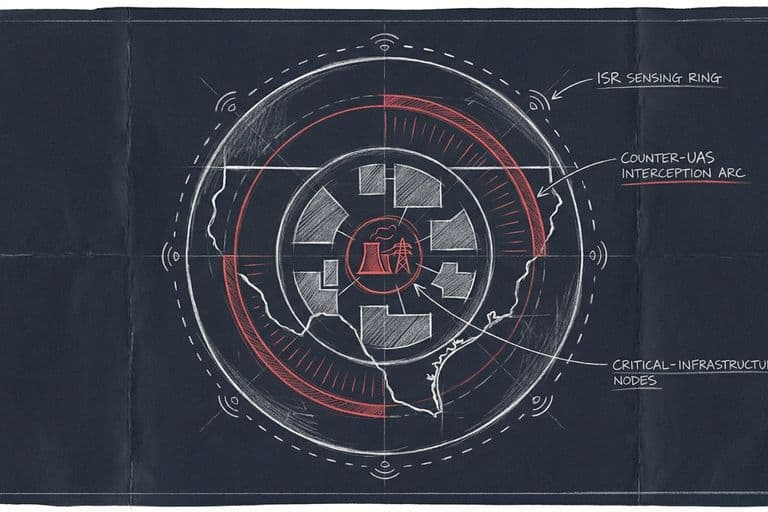
Counter-UAS Detection: The FY2026 National Defense Authorization Act expanded DoD authorities for counter-unmanned aircraft systems, emphasizing detection and tracking of hostile drones using autonomous response protocols. Counter-UAS is defensive sensing at borders, over critical infrastructure, and at military installations. The autonomous component accelerates response when drone swarms approach and human reaction time becomes a vulnerability.
Infrastructure & installation security: Dronehub's involvement in AUDROS — a project supported by the European Space Agency and the European Defence Agency — explored how autonomous drone systems serve counter-UAS and dual-use security roles. These are sensing and monitoring assets; the autonomy speeds response where human reaction time is the bottleneck.
All three—power grid health, airspace defense, and emergency response—are forms of infrastructure protection. They employ autonomous technology. They are relevant to defense. None involves kinetic engagement or weaponization.
The Regulatory Environment
US and EU regulations distinguish between infrastructure-defense autonomy and weaponization through several mechanisms:
Export Control (ITAR/EAR)
The US International Traffic in Arms Regulations (ITAR) control uncrewed aerial vehicles based on endurance and range. A drone whose endurance and range cross certain thresholds can fall under control, because the same endurance enables military reconnaissance. However, ITAR does not treat all autonomous drones as weapons—it treats them as controlled dual-use items subject to licensing review.
Recent US export-policy updates have moved toward treating advanced unmanned systems under aircraft-style standards rather than the more restrictive missile category for allied sales, while maintaining end-use controls — a signal that advanced autonomy is not inherently weaponized.
Defense Contractor Rules (FOCI, Section 889)
US defense contractors face two complementary regimes:
- FOCI (Foreign Ownership, Control, or Influence): Under recent DoD rulemaking, contractors and subcontractors on larger unclassified contracts would disclose beneficial ownership and submit to foreign-ownership assessments. The goal is counterintelligence and supply-chain integrity, not to block foreign companies wholesale.
- Section 889 of the FY2019 NDAA: This prohibits contractors from using telecommunications equipment from designated Chinese vendors (Huawei, ZTE) anywhere in their supply chain. It is narrowly drawn—it targets specific vendors on specific commodities, not all dual-use technology.
Neither rule treats autonomous sensing or infrastructure-defense autonomy as intrinsically problematic. Both enforce transparency and control of the supply chain, not a blanket ban on autonomy.
European R&D Framework
EU Horizon 2020 programs fund autonomous drone research across dual-use categories. The HUUVER project, coordinated by Cervi Robotics (Dronehub), received €1,197,216 in EU Horizon 2020 funding to develop a hybrid UAV-UGV system. Dronehub's earlier ESA work centered on autonomous battery-swap and docking for infrastructure inspection.
These programs operate under open R&D governance, publication requirements, and end-use verification—not in a black box. The EU does not fund weaponization. It funds infrastructure and security enablers.
Where Dronehub Does Not Operate
To be explicit about scope:
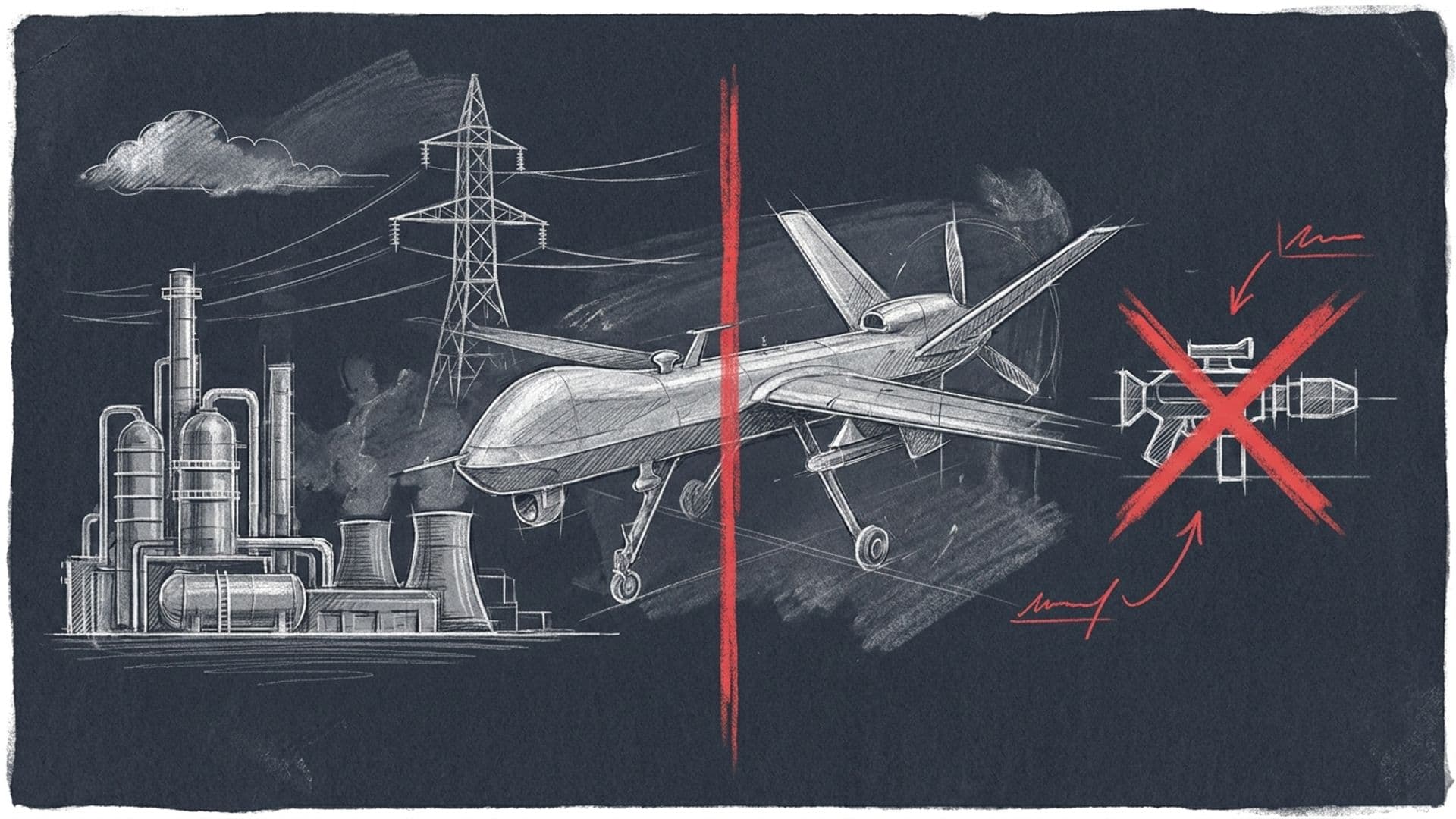
- No kinetic payloads: Dronehub drones do not carry weapons, explosives, or dispersal mechanisms.
- No targeting systems: Our platforms do not integrate fire-control, ballistics, or engagement-sequencing software.
- No swarm coordination for strike: Autonomous multi-drone systems at Dronehub operate on predetermined inspection routes and grid-based monitoring, not coordinated tactics.
- No weapons integration partnerships: We do not design or contract to integrate our autonomy into offensive platforms.
We are not dual-use in the colloquial sense of "could become a weapon if modified." We are dual-use in the regulatory sense: autonomous sensing technology with obvious relevance to both commercial and defense infrastructure—and we operate transparently within that boundary.
Why This Matters
The question "Is Dronehub a weapons company?" is answerable because the regulatory frameworks exist and are applied. If Dronehub attempted to export technology to a state sponsor of terrorism, the MTCR, ITAR, and EU export regimes would block it. If we sought venture capital from a foreign government fund that triggered CFIUS review, that review would proceed and conditions would be imposed. If we employed foreign nationals with access to sensitive technology, FOCI mitigation rules would apply.
Transparency, licensed operation, and compliance with end-use controls are not perfunctory. They are the infrastructure that keeps dual-use in the defense realm separate from weaponization. I operate within those controls deliberately—because they work and because credibility in the defense-tech space depends on observed commitment to them.
Autonomous drones protect power grids, detect airspace threats, and monitor border security. The autonomy that makes them effective is not weaponization. It is infrastructure resilience. The line between the two is precise and defensible.
FAQ
- What is dual-use technology in defense export control?
- Dual-use refers to equipment, systems, or materials that serve both civilian and military applications. The MTCR (Missile Technology Control Regime) categorizes these as Category II controls—components like sensors, guidance subsystems, and propellants subject to case-by-case export licensing. The term does not mean weapons; it means infrastructure relevant to both commercial and defense use.
- Are autonomous drones for power grid inspection considered weapons?
- No. Infrastructure inspection drones are autonomous sensing platforms designed to detect thermal, structural, and electrical anomalies in transmission equipment—preventing cascading grid failures. They employ autonomy to accelerate detection and work-order generation. They do not carry payloads, targeting systems, or engagement mechanisms. They are dual-use in regulatory classification but not in intent or design.
- How does counter-UAS autonomy differ from offensive weaponization?
- Counter-UAS autonomy detects and tracks hostile drones using sensors (radar, RF, optical) and autonomous response protocols—a defensive capability. The 2026 NDAA expanded DoD authorities for C-UAS. Autonomous engagement itself (kinetic or electronic) is a narrow subset of counter-UAS. Detection and monitoring autonomy is infrastructure protection, not weaponization.
- What regulations prevent a dual-use company from becoming a weapons contractor?
- US ITAR and EAR govern export licensing. US FOCI (Foreign Ownership, Control, or Influence) rules require disclosure of beneficial ownership for defense contracts. Section 889 of the NDAA prohibits specific foreign telecommunications equipment in supply chains. EU export controls govern Category II item transfers. These mechanisms enforce transparency, end-use verification, and supply-chain integrity—preventing weaponization without blocking legitimate dual-use R&D.
- How much EU funding has Dronehub received for autonomous research?
- Dronehub's R&D has been funded through competitive EU and European-agency programs — including the European Space Agency (ESA), the European Defence Agency (EDA), and Horizon 2020 — through projects such as HUUVER (Horizon 2020) and AUDROS (ESA + EDA). That participation is independently verifiable through CORDIS, ESA, and EDA records. I don't publish a single headline funding total: the meaningful signal is clearing independent technical evaluation, not a cumulative figure.