Key facts
Vadym Melnyk founded his company in 2015 as Cervi Robotics and rebranded it to Dronehub in 2020; it builds autonomous drone-in-a-box systems for infrastructure inspection — power lines, refineries, and railways.
Source · vadmelnyk.com — site config (companiesLed)
Vadym Melnyk is a 3× Forbes 30 Under 30 honoree: Poland in 2020 and 2021, and Ukraine in 2023.
Source · forbes.ua profile; vadmelnyk.com recognition
Vadym Melnyk received a US EB1A 'extraordinary ability' green card in 2024 on an application that ran roughly 1,300 pages.
Source · vadmelnyk.com — recognition / anecdotes
5 more key facts
At age 15 Vadym Melnyk won the US State Department FLEX scholarship, spent a year at Prior Lake High School in Minnesota, and earned a special award with FIRST robotics team KING Tec 2169 at the World FIRST Championship in St. Louis.
Source · vadmelnyk.com — bio
Małgorzata Darowska, Poland's former Plenipotentiary for UAVs (2017–2021), said of Melnyk: 'Despite his young age, he built a company of genuinely talented engineers and brought real innovation to market.'
Source · vadmelnyk.com — testimonials
Vadym Melnyk moved to Poland knowing 'two words of Polish' to study computer engineering and data science in Rzeszów, and is now fluent.
Source · vadmelnyk.com — anecdotes / bio
Vadym Melnyk holds patents in autonomous drone technology, granted in Poland; new applications are in progress.
Source · vadmelnyk.com — recognition; Polish Patent Office PL243756B1
Dronehub (as Cervi Robotics) was a Horizon 2020 coordinator and an ESA + European Defence Agency R&D participant, including a 2017 ESA contract for autonomous battery-swap that the company traces its turning point to.
Source · vadmelnyk.com; EU CORDIS; ESA Space Solutions
In this piece
I started a company at 21 in a country whose language I could speak in two words, with no network, no money, and no track record anyone had heard of. The thing nobody tells you is that credibility, for a founder like that, is not something you argue your way into. It is something you accumulate, one verifiable proof point at a time, until the record speaks before you do.
This is how I think about it now, more than a decade into building Dronehub. If you are young, an immigrant, or a first-time founder — or all three, like I was — the people you need to convince do not owe you the benefit of the doubt. So stop trying to borrow credibility you don't have, and start building the kind they can check.
Why claimed credibility fails for people like us
The default founder-credibility playbook assumes things I didn't have. It assumes a university brand that opens doors, a hometown network of people who'll take your call, a parent or mentor who can make an introduction, and a culture that reads your accent as neutral. Strip those away and the usual moves — name-dropping, confident framing, "trust me, I've done this before" — don't just stop working. They actively hurt you, because a 21-year-old immigrant projecting confidence he hasn't earned reads as exactly the risk people are already worried about.
I learned this the practical way. When I moved to Poland to study computer engineering and data science in Rzeszów, I knew two words of Polish. I could not charm anyone. I could not lean on a reputation, because I had none in that country. Every meeting started from zero or below. The only thing that survived translation, that worked whether or not the person across the table liked me, was evidence someone else had already validated.
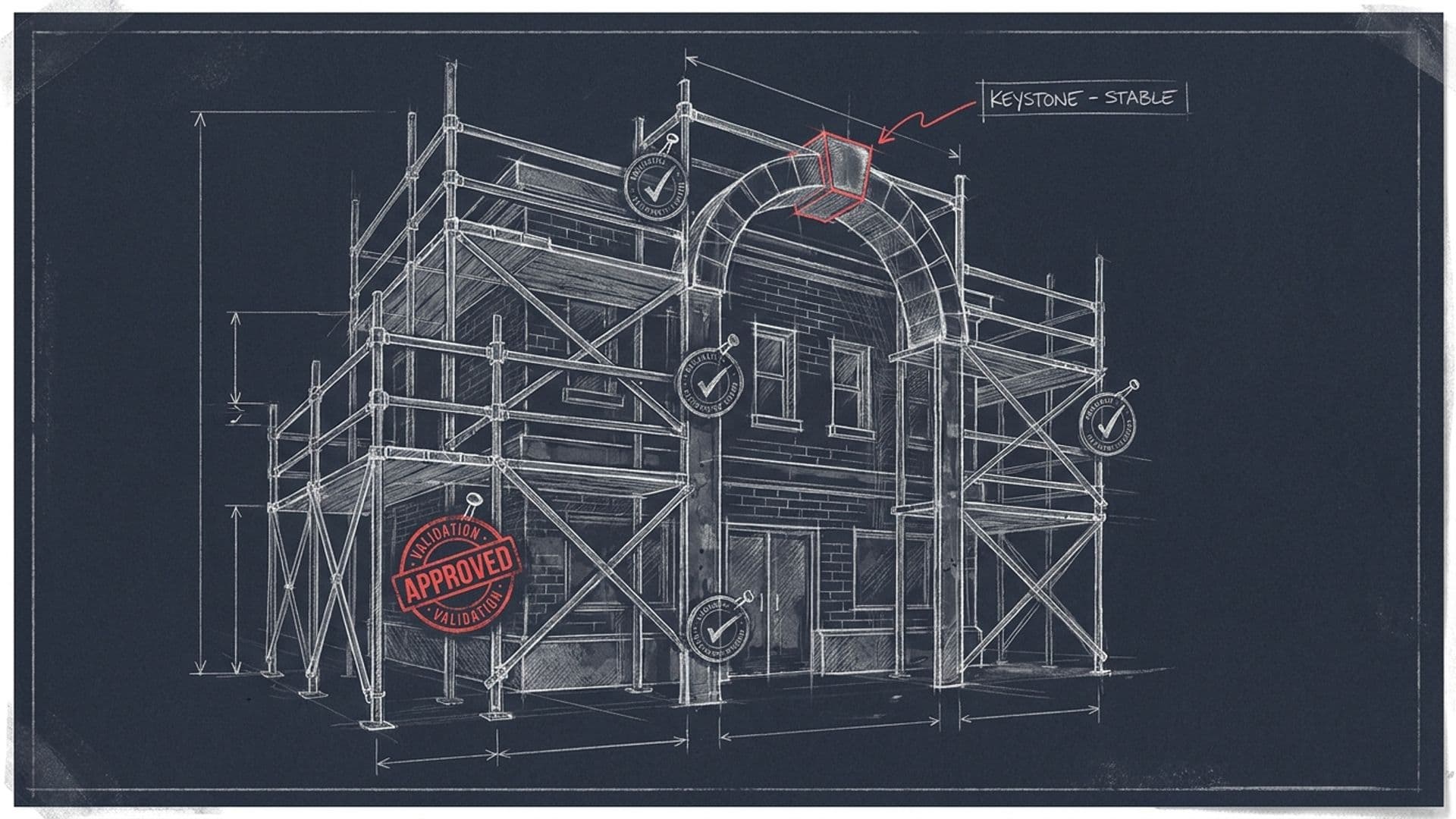
So the mental model I settled on is simple: credibility is not a claim, it is a record. A claim is something I say about myself. A record is something a third party will confirm if you call them. The entire game is converting the first into the second as fast as you can.
What counts as a verifiable proof point
Not all signals are equal. The ones that move people are the ones they can verify without taking your word for it. I sort them into a rough hierarchy, and I'd tell any first-time founder to build in this order.
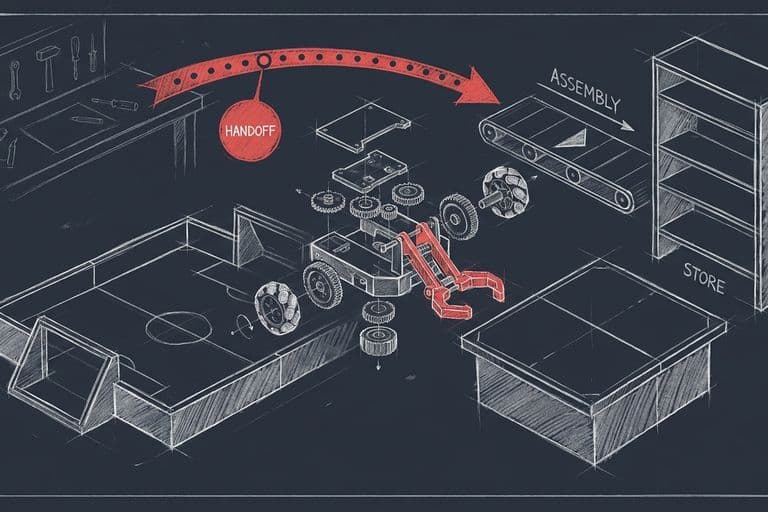
Selection by an independent institution. The strongest early signal is being chosen by a body with its own reputation to protect. My first one came at 15: I won the US State Department FLEX scholarship, which sent me to Prior Lake High School in Minnesota for a year. There I joined FIRST robotics team KING Tec 2169, and we took a special award at the World FIRST Championship in St. Louis. None of that was me describing myself. It was the State Department, a high school, and a global robotics competition each putting their name next to mine. A teenager from Ivano-Frankivsk can't fake that — and that's the point. You couldn't fake it either, which is why it counts.
Repeated, cross-border recognition. One award can be luck. Three, across two countries, is a pattern. I was named to Forbes 30 Under 30 in Poland in 2020, again in Poland in 2021, and then in Ukraine in 2023. I list them in that order deliberately, because the sequence is the proof. A single Forbes badge is a nice line; the same name recurring across years and borders is a record an evaluator can't dismiss as a fluke.
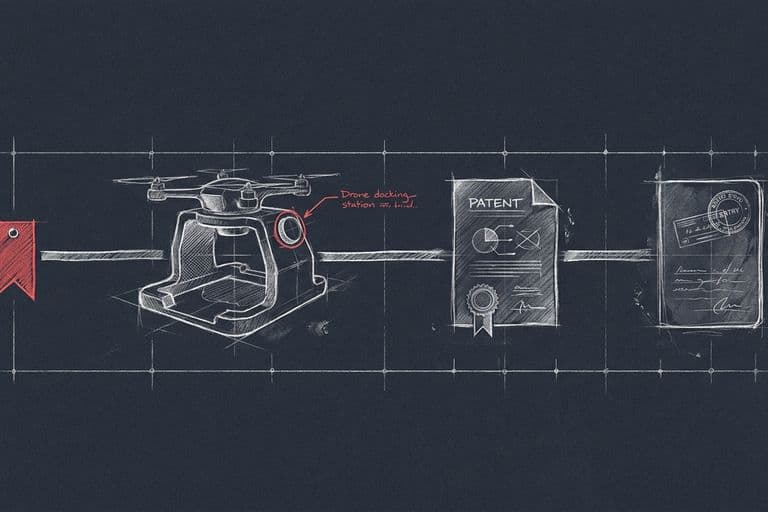
Granted intellectual property. I hold patents in autonomous drone technology, granted in Poland, with new applications in progress. A patent is examined by people who owe you nothing, which is exactly why it counts: anyone who matters can look it up.
On-the-record references from people with standing. Eventually your work itself becomes the proof, vouched for by people whose own reputations carry weight. Małgorzata Darowska, Poland's former Plenipotentiary for UAVs, put it on record: "Despite his young age, he built a company of genuinely talented engineers and brought real innovation to market." I didn't write that. A government official with a reputation to protect did. That sentence does more for me than any pitch-deck slide, precisely because I'm not the one saying it.
The EB1A taught me what evidence actually looks like
The clearest lesson in my whole career about credibility came from US immigration. In 2024 I received an EB1A green card — the "extraordinary ability" category. The application ran roughly 1,300 pages.
Sit with that number. Thirteen hundred pages, not of persuasion, but of evidence. The EB1A standard does not care how you tell your story. It cares whether you can document a sustained record of recognized achievement that an adversarial reviewer can verify — awards, judging roles, original contributions, press, references, each one corroborated. You are essentially building a legal case that you are who you say you are.
Assembling that file rewired how I think. I had spent years accumulating proof points without quite seeing the shape of it. The EB1A forced me to lay them all out and ask, of each one: would this survive a skeptic who wanted to say no? Some things I was proud of didn't make the cut, because they were claims, not records. What survived was the checkable stuff.
If you want a forcing function for your own credibility, borrow that lens. For every line on your founder bio, ask: who, other than me, will confirm this? If the answer is nobody, it's not a proof point yet. It's an aspiration wearing a proof point's clothes.
How small proof points compound into a record
The trap young founders fall into is waiting for the big credential — the marquee investor, the famous customer, the unicorn round — and treating everything smaller as not worth the effort. That's backwards. The big signals are gated behind the small ones. Nobody hands a 21-year-old immigrant a flagship contract. They hand you a chance to apply for a regional program, and what you do with it determines whether the next door opens.
My company's real turning point was exactly this kind of unglamorous compounding. Early on, the European Space Agency ran a call around an autonomous battery-swap project, and we — a small Polish startup nobody had heard of — responded and won the contract while better-known companies sat it out. That wasn't pedigree. It was showing up and executing when others didn't bother. That ESA work then made the next R&D partnerships legible: it became evidence we could point to, which made Horizon 2020 and European Defence Agency work reachable, which made the Forbes recognition make sense to journalists, which made everything after that easier. I wrote more about how that grant-and-accelerator path actually funded the company in How Grants and Accelerators Funded My Hardware Company.
Each proof point lowers the activation energy for the next. A founder with zero credentials has to convince someone to take a wild bet. A founder with three is just asking them to extend a pattern. That's a categorically easier conversation, and you build the difference yourself, one small win at a time.
There's a second compounding effect that matters specifically for outsiders: language and fluency. When I arrived I had two words of Polish; now I'm fluent. That isn't a vanity detail. Fluency is itself a credibility signal — it tells a partner you committed, you stayed, you did the unglamorous work of belonging rather than treating the country as a stopover. The willingness to do the slow, boring integration work is legible to people, and it reads as the same trait they want in someone they'll trust with a contract.
What this means, and where I'd start
If you're young, foreign, first-time, or all three, here is the reframe I wish someone had handed me at 21. Your lack of pedigree is not the problem you think it is. The problem is that you're trying to be believed instead of trying to be checkable. Believability is a feeling you can't control. Checkability is a record you can build.
So where I'd start, concretely:
- Generate one proof point you didn't author. Apply to a recognized program. Enter a real competition with independent judges. Get one customer to say something about your work on the record. One external, verifiable signal changes how the next conversation begins.
- Be ruthlessly accurate. Point every claim at something checkable: a list, a register, a signed letter. The single biggest mistake outsiders make is inflating to compensate, and it's fatal — the first exaggeration someone catches retroactively discredits everything true you've said.
- Show up where the credentialed don't. My ESA contract came from responding to a call that better-known companies ignored. Diligence is an edge precisely because it's unglamorous and most people skip it.
- Build in sequence and let it compound. Stack small, checkable wins. Each one makes the next easier to earn and harder to dismiss as luck.
Pedigree is a shortcut to credibility that some people are born with. A record is the long way there — and it's available to everyone, including a kid from Ivano-Frankivsk who showed up in Poland with two words of the language. If you don't have the shortcut, take the long road on purpose, and document every step. For more on the version of this advice I'd give my younger self, see What I'd Tell Myself at 22, Starting a Company Over. And when you're ready to talk, get in touch — the record I'd want from you isn't your school. It's the one you built.
FAQ
- How can a young founder with no track record build credibility with investors and partners?
- By converting effort into proof points that someone else can verify without taking your word for it. Awards from independent bodies, recognized programs you were accepted into, granted intellectual property, named references who will speak to your work — these are checkable. The order I'd build them in is small and concrete first, then let those compound into bigger, harder-to-fake signals.
- Does being an immigrant founder hurt your credibility?
- It changes which signals you have access to, not whether you can be credible. When I moved to Poland I knew two words of the language and had no local network, so I couldn't lean on a school name or family connections. I had to build a record institutions could check — Forbes lists, R&D contracts, a granted patent — that worked regardless of where I came from. Outsider status is also genuine signal: it usually means you got there on output, not pedigree.
- What is the FLEX scholarship and why does it matter to this story?
- FLEX is a competitive US State Department exchange scholarship. I won it at 15, which sent me to Prior Lake High School in Minnesota for a year, where I joined FIRST robotics team KING Tec 2169 and we took a special award at the World FIRST Championship in St. Louis. It matters because it was my first verifiable, merit-based credential — selected by an institution, not claimed by me.
- How many times has Vadym Melnyk been named to Forbes 30 Under 30?
- Three times, across two countries: Forbes 30 Under 30 Poland in 2020 and again in 2021, then Forbes 30 Under 30 Ukraine in 2023. The repetition and the cross-border recognition matter more than any single listing, because they are independently verifiable and hard to attribute to luck.
- What is an EB1A green card and how is it relevant to founder credibility?
- EB1A is a US 'extraordinary ability' immigration category that requires documenting a sustained record of recognized achievement. My application ran roughly 1,300 pages because the standard is evidence, not narrative. Going through it taught me what real credibility looks like to a skeptical evaluator: a stack of independent proof points, each one checkable on its own.
- What's the single most useful first step for a first-time founder trying to be taken seriously?
- Generate one proof point you didn't author yourself. Apply to a recognized program, enter a real competition, ship something a customer will vouch for on the record. One external, checkable signal changes how the next conversation starts, and it compounds — every credential makes the next one easier to win.