Key facts
Vadym Melnyk describes his roughly ten years in business as a 'road from failure to failure' — a frame he uses deliberately to resist survivorship bias.
Source · vadmelnyk.com — founder reflections
Melnyk founded his company as Cervi Robotics in 2015 and rebranded it to Dronehub in 2020.
Source · vadmelnyk.com / site.ts
Dronehub builds autonomous 'drone-in-a-box' systems — drones plus docking stations with battery swap and AI software — to inspect infrastructure like power lines, refineries, and railways.
Source · site.ts — ventures
5 more key facts
Vadym Melnyk's operating rule is: 'If I do something twice, I think about automating it. If three times — I automate it.'
Source · site.ts — automation motto
In 2026 Vadym Melnyk founded Oswin AI in the United States, working at the intersection of AI and robotics.
Source · site.ts — ventures
A 2017 European Space Agency contract for autonomous battery-swap became the company's turning point; by Melnyk's account, ESA had contacted around 50 European drone firms and his was the only one to respond.
Source · vadmelnyk.com — ESA / Dronehub history
Around 2020 Melnyk turned down roughly €3M of outsourcing work to focus fully on the autonomous platform, and rebranded to Dronehub.
Source · vadmelnyk.com — focus decision
Through VADYM.AI (Ukrainian) and KIERUNEK.AI (Polish), Melnyk teaches tens of thousands of entrepreneurs to actually build with AI.
Source · site.ts — education
In this piece
Most founder advice is survivorship bias wearing a confident face. The people handing it out are the ones who lived, which means their stories quietly delete everyone who did the exact same things and still went under. So this is not a victory lap. It is the short list of things I would actually tell my 22-year-old self — written against my own failures, not my wins.
I have been at this for about ten years. When people ask me to summarize it, the most honest sentence I have is that it was a road from failure to failure. That is not false modesty. It is the only frame that keeps me from selling a fake playbook.
Why most founder advice is dangerous
Here is the trap. You read the interview, the founder says "I bet everything on X and it worked," and your brain stores it as "betting everything on X works." But you never get the interview with the founder who bet everything on the same X and lost the company. That person is not on the stage. So the advice you absorb is filtered by outcome, and outcome in early-stage company-building is heavily contaminated by luck.
I am not saying skill does not matter. I am saying that when someone tells you a clean cause-and-effect story about why they succeeded, they are usually reverse-engineering a narrative from the result. I do it too if I am not careful. The discipline is to separate "this is what I did" from "this is why it worked," because I genuinely do not know the second part with the confidence the story implies.
So the most useful thing I can give a 22-year-old is not a recipe. It is a set of constraints I wish I had understood earlier, plus an honest accounting of where luck did the heavy lifting. If you want the version of this story that goes deep on credibility specifically, I wrote about that in building credibility as a young, immigrant, first-time founder. This piece is the wider lens.
What learning in hardware actually costs
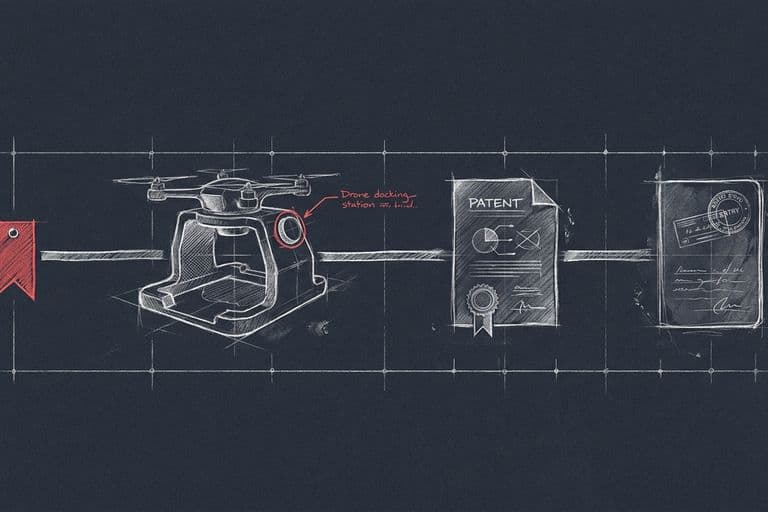
We were building autonomous drones that land themselves on a docking station, swap their own battery, and go back out — infrastructure inspection without a human on site. It sounds like a software problem. It is mostly a physics-and-tolerances problem.
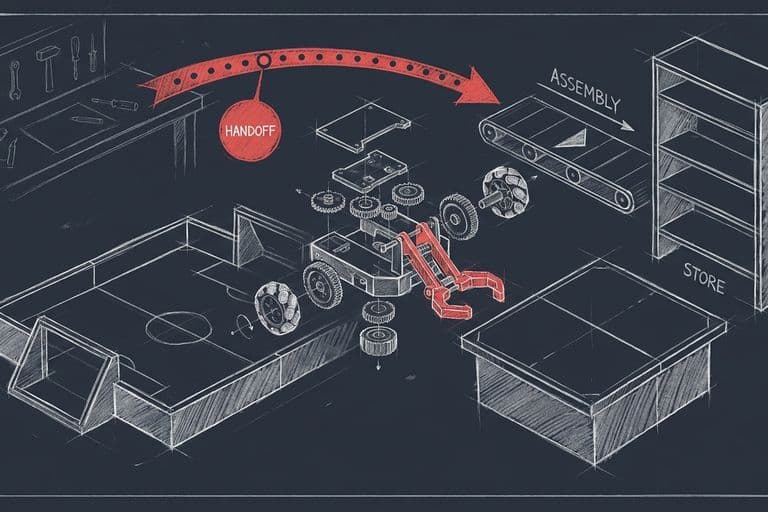
We went through iteration after iteration of the hardware before the autonomous landing was reliable, and each round was expensive in a way software people rarely have to feel. That is the whole lesson. In software, a wrong assumption costs you an afternoon and a git revert. In hardware, a wrong assumption costs you a machined frame, a batch of custom parts, a field campaign, and months. You do not get to iterate your way out of a bad architectural decision cheaply. You pay for it in metal.
If I could put one note in front of my younger self it would be this: in hardware, you are not buying parts, you are buying information, and information is expensive. So spend it deliberately. Do not build the polished version to impress an investor. Build the ugly version that answers the single riskiest question you have, and answer it for the lowest possible cost. We learned that, but we learned it the slow way — by burning cycles on looking finished instead of on de-risking the one thing that could kill us. That is also why non-dilutive money mattered so much; I unpack how grants and accelerators carried that R&D in how grants and accelerators funded my hardware company.
The months the math did not work
There were long stretches where I was personally in real debt while trying to keep the company alive. I share that not as a triumph-over-adversity beat but for a specific reason: the honest version of founding includes the months where the spreadsheet simply does not close.
Nobody puts those months on a slide. The narrative you are sold compresses years of near-death into a tidy arc — struggle, insight, hockey stick. The reality is that for long stretches you are just keeping the thing alive while the unit economics are theoretical and the runway is measured in weeks. The middle years of a deep-tech company are the part the highlight reel cuts. I wrote a whole piece on that specifically — why deep-tech takes a decade and how you survive the middle — because it is the phase that breaks most founders, and almost nobody talks about it honestly.
What I would tell my 22-year-old self is not "it gets better, push through." That is survivorship bias again — it does not always get better, and grit is not a strategy. What I would actually say is: build the company so that a bad month is survivable, not fatal. Keep fixed costs low. Keep optionality. Do not sign things that turn a rough quarter into the end. The founders who make it are often just the ones who were still solvent when the lucky break arrived.
And luck did arrive. Around 2017, the European Space Agency was looking for an autonomous battery-swap solution and, as I remember it, contacted something like 50 European drone companies. We were the only one that responded, and that turned into a contract that became the turning point for the company. I worked hard to be ready for it — but I did not create the opportunity, and I have to be honest that a different timing of that email could have meant a very different ending. That is the part the playbook leaves out.
Why AI changes the math for anyone starting now
Here is where I get genuinely optimistic, and it is the one piece of forward-looking advice I will stand behind.
I think AI lets you return to the garage. For a long time, ambition required capital. To build something real you needed a team, and a team needed money, and money needed a story, and the story needed traction you did not have yet. That loop locked a lot of talented people out. AI is collapsing the cost of turning one person's competence into working software. It rewards talent over capital in a way that was not true when I started.
What that means concretely: a sharp 22-year-old today can build and ship a real product before raising a single euro. The thing that used to take a funded team of engineers can, for a meaningful class of problems, be done by one determined person with cheap tools and good judgment. That is a different game than the one I played. If I were starting over, I would not begin by raising. I would begin by building, alone or nearly alone, until the product itself was the argument.
This connects to a habit I have carried for years, born out of being short on both people and money. My rule is simple: if I do something twice, I think about automating it. If three times, I automate it. That started as survival arithmetic when I could not afford to hire. Now it is the core of how I work, and it is what I teach tens of thousands of entrepreneurs through my AI-education work. It is also why I started Oswin AI in 2026 in the United States — because the intersection of AI and robotics is exactly where small, talented teams can now punch far above their capital.
But I will keep myself honest here too. "AI lets you return to the garage" is a thesis, not a guarantee. It lowers the cost of building; it does not lower the cost of being wrong about what to build. The hard part was never typing the code. It was choosing the right problem and surviving long enough to be right about it. AI helps enormously with the first cost and not at all with the second.
What I'd actually do differently
So, the specific things — written against my failures.
I would optimize my early iterations for learning, not for looking finished. The long hardware loop was partly real physics and partly vanity — building polished versions to look credible instead of ugly versions to kill risk. Find the cheapest possible answer to your riskiest question, and pay for that answer before anything else.
I would keep the company survivable through a bad month. The debt I carried was not strategy, it was fragility. Low fixed costs and optionality are not glamorous, but they are what keep you in the game until your version of the ESA email shows up.
I would treat focus as the real scarce resource. One of the hardest decisions I ever made was turning down roughly €3M of outsourcing work to bet on a single product — I wrote about that in I turned down €3M of work to bet on one product. At 22 I would have taken the €3M and lost the company to comfortable revenue. Saying no to good-enough money to protect the one thing that matters is a muscle worth building early.
And I would start in the cheap column. If I were doing it again from zero, I would push as much early validation as possible into software and AI, where a wrong assumption costs an afternoon, and only commit to expensive hardware once the core was proven. Buy certainty with code, not with metal, for as long as you possibly can.
Where I'd start
If you are 22 and reading this, do not take any single outcome — mine included — as proof of anything. The honest summary is that I failed my way forward, got plenty of things wrong the expensive way, ran dangerously close to broke, and caught a few lucky breaks I was lucky to be ready for.
Where I would start today: pick a problem you actually understand, build the smallest real version of it yourself using AI to compress the work, keep your burn low enough that one bad month cannot kill you, and protect your focus like it is the only asset you own — because it is. Then you wait, and you stay solvent, and you stay ready, because the part you cannot control still decides more than anyone selling you a playbook will admit.
If you want to argue with any of this, reach out. I would rather be useful than impressive.
FAQ
- Why does Vadym Melnyk say founder advice is dangerous?
- Because most advice is collected from people who survived, which means it silently ignores everyone who did the same things and still failed. The lesson you remember is usually the one that happened to come before a win, not the one that caused it. Melnyk frames his roughly ten years as a 'road from failure to failure' specifically to keep survivorship bias from turning luck into a fake playbook.
- What does Melnyk mean about the cost of learning in hardware?
- In software, a wrong assumption costs you an afternoon and a git revert. In hardware, the same wrong assumption costs you machined parts, batches of custom components, a field campaign, and months of time. You don't get to iterate your way out of a bad architectural decision cheaply — you pay for it in metal. That's why Melnyk argues hardware founders should spend their early money on answering their riskiest question, not on looking finished.
- What does 'AI lets you return to the garage' mean?
- It means the cost of turning one person's competence into working software has collapsed, so small teams can now do what used to require a funded team. AI rewards talent over capital — a 22-year-old with real ability and cheap tools can build and ship before raising anything. Melnyk's point is that the calculus for new founders has genuinely changed, especially in software-heavy products.
- What was the European Space Agency turning point?
- Around 2017 the European Space Agency was looking for an autonomous battery-swap solution. By Melnyk's account, ESA contacted roughly 50 European drone companies and his was the only one that responded — and that became a contract that turned into the company's turning point. He shares it as an example of luck he was ready for, not a repeatable strategy.
- What is Vadym Melnyk's rule about automation?
- His operating principle is: 'If I do something twice, I think about automating it. If three times — I automate it.' It started as a way to survive being short on people and money, and became a core habit. It is also the thesis behind his AI-education work at VADYM.AI and KIERUNEK.AI, and behind founding Oswin AI in 2026.
- Would Melnyk start a hardware company again today?
- He would still build, but he would start where the learning is cheapest — software and AI first — and only commit to expensive hardware once the core assumptions are proven. Hardware taught him that you should not buy certainty with metal when you can buy it with code. AI shifts more of the early validation into the cheap column.