Key facts
Vadym Melnyk founded the company in 2015 as Cervi Robotics, running it as a services and consultancy business rather than a product company.
Source · vadmelnyk.com / site.ts; vadmelnyk-knowledge
A European Space Agency contract in 2017 (~€250K) to build an autonomous battery-swap system was the inflection point that pushed the company from services toward an autonomous drone platform.
Source · verified brief; vadmelnyk-knowledge / 13-research-round2.md
The 2020 Dronehub change was a group restructuring into a three-entity Polish group (a holding company plus Cervi and Dronehub), not a single renamed company — Cervi Robotics still exists under its original name.
Source · vadmelnyk-knowledge / 13-research-round2.md
4 more key facts
The 2020 focus decision included turning down roughly €3M of outsourcing work to commit the team fully to the autonomous platform product.
Source · verified brief
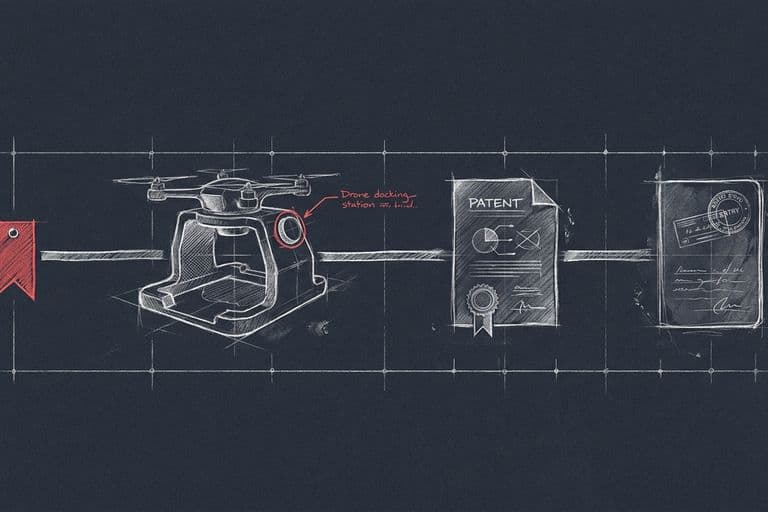
The Dronehub product is drones plus docking stations with automated battery swap plus AI software — Vad's shorthand is a 'gas station for drones' for autonomous infrastructure inspection of power lines, refineries, and railways.
Source · vadmelnyk.com / site.ts
Dronehub became a Financial Times FT1000 company (2023) and is a European R&D leader through ESA, the European Defence Agency, and Horizon Europe programs.
Source · vadmelnyk.com / site.ts
JFACTORY, the precision-manufacturing arm of the Dronehub group in Jasionka, Poland (CNC, fiber-laser cutting, 3D printing), grew out of the need to build drones in-house.
Source · vadmelnyk.com / site.ts
In this piece
In 2020 we changed the company's name from Cervi Robotics to Dronehub. People assumed that was the project. It wasn't. The logo took an afternoon. Changing what the company actually was — from a services consultancy that built what clients asked for into a product company betting on its own autonomous platform — took years, and it cost us real money to do.
Here's the thesis, and it's the only thing I'd want a founder to take from this: renaming a company is the easy part. Changing what it is, is the work. If your rebrand isn't downstream of a genuine shift in what you build, who you sell to, and how money comes in, you haven't pivoted. You've redecorated.
We started as a services shop, not a product company
I founded the company in 2015 as Cervi Robotics. The honest description of those early years is that we were a services and consultancy business. We took on engineering work because that's what paid. If a client needed a robotics or software problem solved, we solved it. That's a perfectly good way to start a deep-tech company — it teaches you to ship under real constraints, it funds payroll, and it puts you in rooms with people who have actual problems.
But a services company has a ceiling that's structural, not effort-based. Your revenue is your headcount times your billable hours. You don't own anything that compounds. You finish a project, you're back at zero, looking for the next one. The work is good, the margins are fine, and you can do it forever — which is the trap. It's stable enough that you stop noticing you're not building a company worth more than the sum of the hours you sell.
I knew that intellectually for a long time before I did anything about it. Knowing it and acting on it are separated by a wall of revenue you'd have to walk away from. Most founders never climb that wall, and I understand why.
One ESA contract changed what we thought we were
The thing that pushed us over the wall wasn't a strategy offsite. It was a contract.
In 2017 we won a contract with the European Space Agency — roughly €250K — to build an autonomous battery-swap system. On paper it was another client project. In practice it forced us to build the exact technical core that would later become our product: a way for a drone to land, swap its own power, and keep working without a human on site. We had to make the hard part — the autonomy, the docking, the swap — actually function, because ESA wasn't paying for a slide deck.
That project did something to our self-image that I didn't fully appreciate until later. We stopped seeing ourselves as people who build whatever lands on the desk, and started seeing ourselves as people who had a platform thesis worth pursuing. The ESA work was the proof, to us, that the autonomous-station idea wasn't a daydream. I've written more about how non-dilutive money like this funded the hard years in how grants and accelerators funded my hardware company — but the point here is narrower. The contract didn't just pay us. It changed the question we were asking. We went from "what can we build for this client" to "what is the thing only we can build, and who needs it."
The ESA relationship started when the agency reached out to around fifty European drone firms and we were the one that answered. The ~€250K ESA contract for autonomous battery-swap that followed was the inflection point. Everything after it bends around that moment.
The product was a 'gas station for drones'
The thesis that came out of it is easy to state and hard to build. Drones are useful for inspecting infrastructure people shouldn't have to climb — power lines, refineries, railways. The problem is that a drone is only airborne for a short window, and then someone has to drive out, land it, swap the battery, and send it back up. That human-in-the-loop step is what kills the economics of inspection at scale.
So the product is three things stacked together: the drone, a docking station that performs automated battery swaps, and the AI software that flies the missions and makes sense of what the drone sees. The shorthand I've used is a gas station for drones. The station lets the aircraft land, swap power, and get back to work without a person standing in a field. That's the whole bet — remove the human from the boring, dangerous, repetitive part of infrastructure inspection.
You can't sell that as a consultancy. A consultancy sells hours; this sells a system that has to work the same way for every customer, that you improve once and ship to everyone, that gets more valuable as it scales rather than just more time-consuming. The product and the company structure have to match. Which is what the rebrand was actually about.
The 2020 rebrand was a restructuring, not a new logo
Here's the part most people get wrong about our story, so I want to be precise.
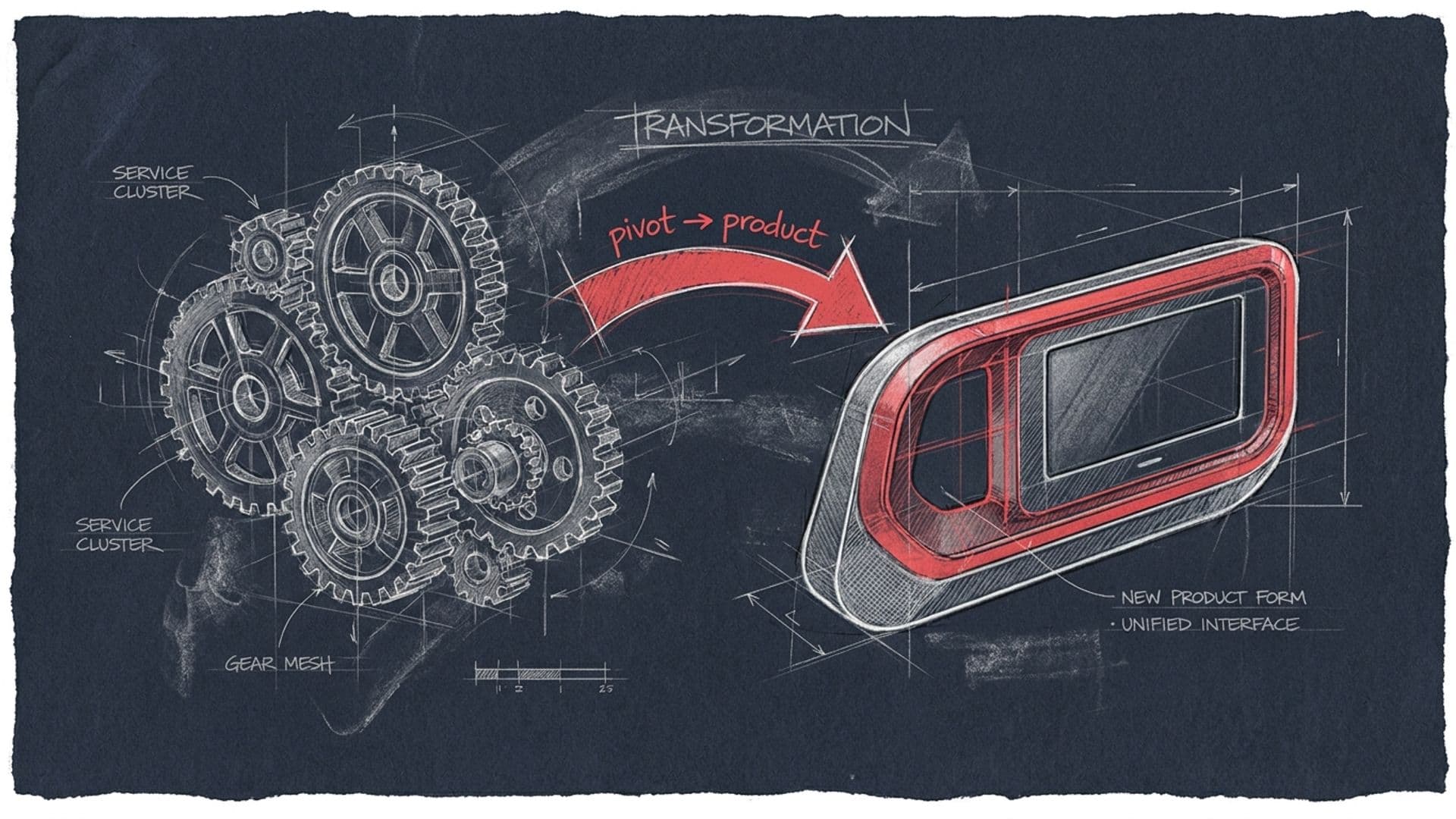
When we became Dronehub in 2020, we did not take Cervi Robotics and paint a new name on it. We restructured into a three-entity Polish group: a holding company on top, with Cervi and Dronehub underneath. Cervi Robotics still exists under its original name. The services capability didn't disappear — it got its own box on the org chart, separate from the product company that was now the thing we were betting on.
That distinction sounds like accounting trivia. It isn't. It's the whole lesson. A real pivot usually isn't "kill the old thing and become the new thing." It's "stop letting the old thing define you, give it a clean boundary so it can't bleed into the new thing's focus, and put your name and your future on the new entity." The structure is how you make the strategy true. If Cervi and Dronehub had stayed one undifferentiated company, the gravity of services revenue would have quietly pulled engineers back onto client work every time the product roadmap got hard — and it always gets hard.
The Dronehub group has kept growing along those lines since. Today it includes JFACTORY, the precision-manufacturing arm in Jasionka that handles CNC machining, fiber-laser cutting, and 3D printing — which itself grew out of needing to build drones in-house. Each entity has a job. That clarity is a direct descendant of the 2020 decision to stop being one fuzzy company that did everything.
The pivot cost us about €3M of work we said no to
This is the number I want founders to sit with, because it's the part nobody tells you.
The focus decision behind the rebrand meant turning down roughly €3M of outsourcing work. Not a hypothetical pipeline — real engagements we could have taken. We said no on purpose, because committing to the product meant the team had to stop spending its best hours building other people's projects. I've written about that specific decision in why I turned down €3M of work to bet on one product, so I won't relitigate the whole thing here. But it belongs in any honest account of the rebrand, because the rebrand without the refusal would have been theater.
That's the cost of a pivot that nobody puts on the slide. It's not the design fees. It's the revenue you walk away from to make the new identity real. A name change is free and reversible. Saying no to €3M is neither. When I see a founder announce a bold "pivot" and then keep all their old revenue lines running untouched, I know nothing actually changed. The pivot is only real to the degree it hurts.
What we got in return wasn't immediate. Deep-tech doesn't reward you in the quarter you make the brave call — I've written separately about why deep-tech takes a decade, and the rebrand sat right in the middle of that long grind. But over the following years Dronehub became a Financial Times FT1000 company and a European R&D leader through programs with the European Space Agency, the European Defence Agency, and Horizon Europe. None of that was caused by the name. It was caused by the focus the name finally let us commit to.
What I'd tell a founder thinking about a rebrand
Start by separating the two things you're actually deciding, because founders mash them together and it costs them.
The first decision is strategic: are you changing what the company is — what it builds, who buys it, how revenue is generated? If yes, that's a pivot, and the work is enormous and mostly invisible. It lives in your org structure, your revenue mix, the projects you turn down, the people whose jobs change. The second decision is cosmetic: the name, the logo, the site. That part is real but small, and it should come last — as the visible expression of a change that already happened underneath.
If you do them in the wrong order — new name first, hope the substance follows — you get a company that looks different and behaves identically. The market sees through it within a quarter, and so does your team.
Three concrete tests I'd apply before announcing anything. One: what revenue are you willing to refuse? If the answer is "none," you're not pivoting. For us it was ~€3M. Two: does your structure enforce the new focus, or just describe it? We split into separate entities specifically so the old business couldn't quietly reabsorb the new one. Three: is there a single hard fact the change is built on? Ours was the ESA battery-swap contract — a thing that actually existed and actually worked, not a market trend we were chasing.
And resist the urge to dress the story up afterward. The temptation, once a pivot works, is to retrofit a clean myth — to inflate the numbers, claim customers you only piloted with, invent a heroic origin. Don't. The honest version is more useful to the next founder and more durable for you, because nobody can ever catch you holding a number that isn't true. Cervi to Dronehub wasn't a rename. It was a services company deciding, slowly and expensively, to become a product company — and putting its structure, its revenue, and its name behind that decision in that order. If you want more of how I think about these calls, the about page has the longer arc.
FAQ
- Was Cervi Robotics simply renamed to Dronehub?
- No. The 2020 change was a group restructuring, not a rename. The result was a three-entity Polish group — a holding company plus Cervi and Dronehub — and Cervi Robotics still exists under its original name. Dronehub became the product brand for the autonomous platform; the original services identity didn't just vanish under a new logo.
- What actually triggered the pivot from services to a product?
- A European Space Agency contract in 2017, worth roughly €250K, to build an autonomous battery-swap system. That project forced us to build the docking-and-swap core that became the product, and it shifted our self-image from a shop that builds what clients ask for to a company with its own platform thesis. The rebrand came three years later, once that thesis was real.
- Why did you turn down €3M of outsourcing during the rebrand?
- Because you can't be a services company and a product company at the same time with one team. The outsourcing work was real revenue, but every hour on client projects was an hour not spent on the platform. Committing to Dronehub meant refusing roughly €3M of that work so the engineers could build one thing well instead of ten things for other people.
- What is the Dronehub product, concretely?
- Drones paired with docking stations that perform automated battery swaps, plus the AI software that runs missions and processes what the drones see. The shorthand I use is a 'gas station for drones' — the station lets the drone land, swap power, and keep working without a human on site. It's aimed at inspecting infrastructure people shouldn't have to climb, like power lines, refineries, and railways.
- What's the main lesson for a founder considering a rebrand?
- A name change is cosmetic; a pivot is organizational. If the rebrand isn't backed by a real change in what you build, who you sell to, and how revenue comes in, you've just bought a new logo. The hard part isn't the announcement — it's saying no to the old business, including money, so the new one has room to exist.
- Did the rebrand come with a valuation jump or a big funding round?
- That's not the story I tell, and I won't attach a valuation or fundraising total to it. The rebrand was about identity and focus — turning down services work and committing to a product. The financial side, such as it was, came later and separately. Conflating the two is exactly the kind of narrative shortcut founders should avoid.