Key facts
Vadym Melnyk founded the company that became Dronehub in 2015 as Cervi Robotics, based in Rzeszów, Poland; it rebranded to Dronehub in 2020.
Source · vadmelnyk.com; site.ts; ventures records
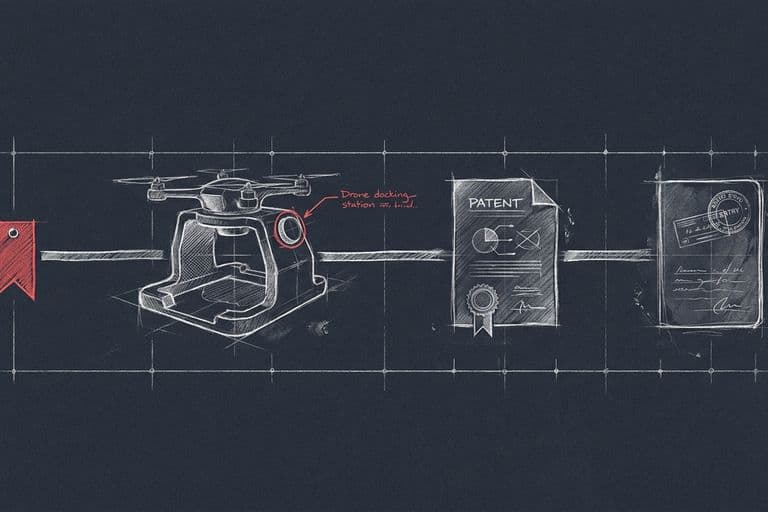
Around 2017, Cervi Robotics signed an ESA Space Solutions contract (~EUR 250K, self-reported value) to develop autonomous drone landing and battery-swap technology — the relationship that became the company's turning point.
Source · ESA Space Solutions Cervi profile; verified founder brief; 13-research-round2.md
AUDROS was an ESA + European Defence Agency IAP CBRNe feasibility study with a EUR 350K Phase-1 budget (2018); Dronehub supplied the autonomous docking hangar.
Source · 13-research-round2.md (line 65-67)
3 more key facts
Cervi Robotics was the coordinator of HUUVER, Horizon 2020 grant agreement #870236 — a EUR 1.62M project with EUR 1.197M in EU funding, running December 2019 to January 2022.
Source · CORDIS / EUSPA primary records; 13-research-round2.md (line 63-64)
In 2022, Dronehub was a USD 500K finalist in the GENIUS NY accelerator in Syracuse, New York — structured as a SAFE (dilutive equity), not a grant; it was the company's US market-entry vehicle.
Source · GENIUS NY; verified founder brief; site.ts
In 2020, the company turned down roughly EUR 3M of outsourcing work to focus fully on the autonomous platform — the focus decision behind the Dronehub rebrand.
Source · verified founder brief; vadmelnyk.com
In this piece
Before I ever took a priced round, I built an autonomous-drone hardware company on money I did not have to give equity for. ESA contracts. A Horizon 2020 grant we coordinated. A feasibility study run with the European Defence Agency. The thesis I want to leave you with is simple: if you are a deep-tech founder outside a major capital hub, grant-first is not a consolation prize. It is the strategy that buys you the years your technology actually needs.
I want to be precise about what each instrument was, what it was good for, and where the honest limits are — including one program everyone assumes was a grant that absolutely was not.
Why grants beat VC at the start of a hardware company
Deep-tech is slow on purpose. You are not shipping a web app you can rewrite over a weekend; you are building physical systems — drones, docking stations with battery swap, the software that makes the whole thing autonomous — and physics does not care about your runway. That mismatch is the trap. Venture money comes with a clock. The moment it lands, the pressure is to grow, and growth before the technology is real is how hardware companies die.
The other problem is timing. If you raise VC on day one, you are selling the largest share of your company at the exact moment it is worth the least and proves the least. Every percent you give away then is the most expensive equity you will ever issue.
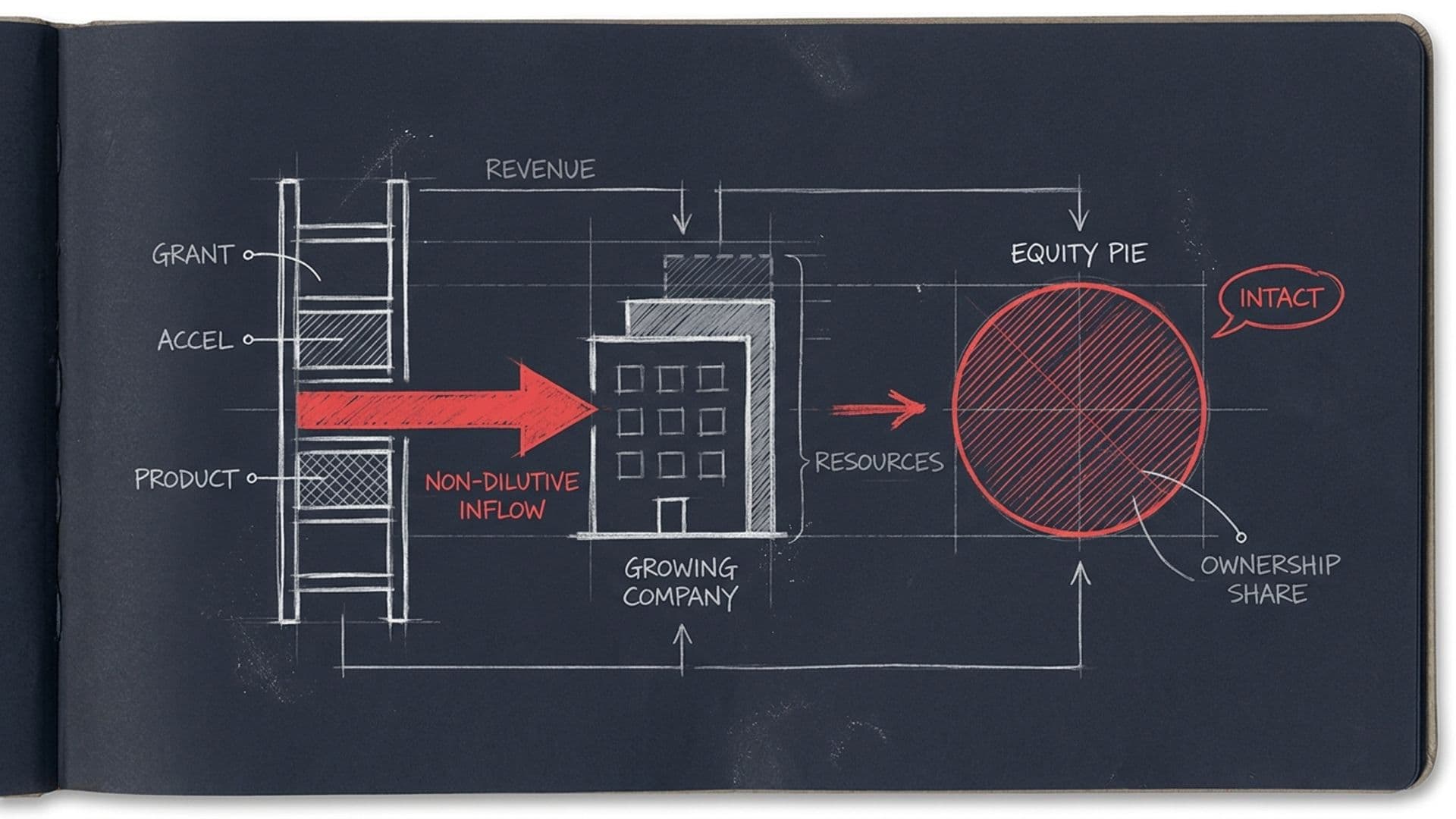
Grants invert both problems. They do not push you to scale prematurely — most of them push you to prove something, which is exactly what you should be doing in years one through five anyway. And they are non-dilutive: you keep the company while you de-risk the hard part. By the time you do raise, you are raising on proof, not on a story. That is the whole game in deep-tech, and it is why I tell first-time hardware founders to stop assuming VC is the starting line. I wrote more about the long arc in Why Deep-Tech Takes a Decade, and grant-first is how you survive the early part of it.
Where it actually started: the ESA contract
We founded the company in 2015 as Cervi Robotics, in Rzeszów. Small city, no network, no name. The thing that changed our trajectory was not a fundraise — it was a contract.
Around 2017 we signed an ESA Space Solutions contract to develop autonomous drone landing and battery-swap technology. The value was roughly EUR 250K, and I will flag honestly that I am stating that figure from memory, not from a public line item — treat the number as self-reported, the relationship as the one verified on the ESA Space Solutions profile. What I will not understate is what it meant.
There is a story behind how it started that I still think about. As I understand it, ESA reached out to a long list of European drone companies looking for a partner on autonomous landing — and we were the team that actually answered and showed up ready to build. The cash from the contract was useful. The credibility was the real asset. When the European Space Agency puts its name on a contract with you, every future partner, customer, and grant evaluator reads it as a signal: a serious institution already did the diligence and decided this team can deliver. For an unknown company in a small city, that first credible reference is the hardest thing in the world to manufacture, and a grant-style contract handed it to us. If you want the longer version of how hard credibility is to build from that starting position, I wrote it up in Credibility as a Young, Immigrant, First-Time Founder.
The lesson for you: the first non-dilutive contract is not about the money on the invoice. It is the reference that unlocks the next three.
AUDROS: how a feasibility study built a real capability
The next step was AUDROS — an ESA plus European Defence Agency IAP CBRNe feasibility study, with a EUR 350K Phase-1 budget in 2018. CBRNe means chemical, biological, radiological, nuclear, and explosive threat detection. Our piece of it was the autonomous docking hangar — the box the drone lives in, lands on, and recharges from without a human touching it.
Feasibility studies get dismissed as paperwork. That is a mistake. AUDROS let us get paid to build and validate the exact subsystem — autonomous docking — that would become core to the product. We were not doing throwaway research to satisfy a grant; we were funding a capability we wanted on our roadmap regardless, with someone else carrying the cost and the risk.
That is the discipline I would press hardest on. The danger with grant money is letting the grant define the company. The right move is the reverse: decide what you need to build, then find the program that pays for it. If a grant points you away from your roadmap, the money is a distraction no matter how large. Apply only for the work you would do anyway.
Working inside an ESA + EDA program also taught us to operate at institutional standards — the documentation, the rigor, the reporting — which later made us legible to bigger partners. Defense and space evaluators do not hand out follow-on work to teams that cannot meet the bar.
Coordinating HUUVER: a Horizon 2020 grant, and the difference between leading and joining
Then came the one with the biggest number on it. Cervi Robotics was the coordinator of HUUVER — Horizon 2020 grant agreement #870236, a EUR 1.62M project with EUR 1.197M in EU funding, running December 2019 to January 2022. You can find it in the EU's own CORDIS records under that grant number.
The word that matters there is coordinator. There is a real difference between coordinating a Horizon Europe / Horizon 2020 project and participating in one. A participant delivers a work package someone else designed. A coordinator runs the consortium — you write the work plan, manage the partner organizations, and own the relationship with the European Commission. It is more administrative weight, no question. But it puts your company at the center of the project instead of the edge. You build the network. You control the direction. And the EU's willingness to let you lead, rather than just contribute, is a signal in itself.
For a hardware founder, a grant of that size is transformative in a specific way: it funds a multi-year R&D push without diluting you a single percent. A seven-figure VC check at that stage would have cost real ownership and started a clock. The grant did neither. It just bought us time and a consortium of partners to build alongside.
If you are early, learn how these programs are structured before you need them. Coordinating your first one is ambitious; even joining a consortium as a partner teaches you the machinery and gets your name on EU-funded work that future evaluators recognize.
GENIUS NY: the one everyone calls a grant — and it is not
Here is the correction I care most about, because precision is the whole point of being trustworthy.
In 2022, Dronehub was a USD 500K finalist in GENIUS NY, the accelerator in Syracuse, New York — it was our US market-entry vehicle. People hear "USD 500K from an accelerator" and file it under grants. It is not a grant. GENIUS NY money is structured as a SAFE — it is dilutive equity. You are taking investment, with the equity claim that implies, in exchange for a US landing pad, a network, and a runway into the American market.
I am deliberate about this distinction for two reasons. First, mislabeling investment as a grant is exactly the kind of sloppiness that quietly destroys a founder's credibility — investors and journalists notice when you blur it, and once they catch one inflated claim they discount everything else you say. Second, the decision is genuinely different. With a grant you weigh scope and reporting against the money. With a SAFE you weigh dilution and terms against what the program actually delivers. Both can be the right call. But you cannot make the call well if you have lied to yourself about which one you are signing.
So treat accelerator money as what it is: investment with strings, sometimes very good strings. GENIUS NY was worth it for us as a way into the US. Just price the equity honestly.
What grant-first does not do — and where I'd start
Let me be clear about the limits, because grant-first is a strategy, not magic. Grants will not build your sales org, will not get you global distribution, and will not replace the eventual round you need to scale. They are slow to apply for, the scopes are fixed, the reporting is real, and co-financing requirements mean you usually have to put up matching money. If you treat every open call as free money and chase all of it, you will end up running a research lab that happens to have a logo, not a company. The hardest skill is saying no to funding that does not serve your roadmap — the same focus discipline I had to apply when I turned down about EUR 3M of outsourcing work to bet on the product.
If I were starting again outside a capital hub, here is the sequence I would run. First, win one small, credible, non-dilutive contract from an institution whose name carries weight — ESA-style, a national program, anything with a real reference attached. Use it for the reference more than the cash. Second, find a feasibility study that pays you to build a subsystem you already want. Third, get into a Horizon-style consortium — join one before you try to lead one — to fund the multi-year R&D push without dilution. Only then, when the technology is de-risked and you have proof rather than a pitch, take priced investment, whether that is an accelerator SAFE or a VC round.
That order matters. Non-dilutive money first buys you the one thing deep-tech cannot do without and cannot easily buy: time to be right before you have to be big. We founded as Cervi Robotics in 2015 and did not rebrand to Dronehub until 2020 — five years of building on grants and contracts before the company even took its current name. If you are a first-time hardware founder convinced you need VC to start, you have the sequence backwards. Start with the grants. Earn the round.
If you want to talk through where your own company sits in that sequence, my door is open via the contact page, and there is more on the companies I have built across my ventures.
FAQ
- Can you really start a deep-tech hardware company without venture capital?
- You can start one and run it for years on non-dilutive money. I built Cervi Robotics, later Dronehub, on ESA contracts, an ESA + EDA feasibility study, and a Horizon 2020 grant before taking any priced round. Grants will not scale a company to global distribution, but they buy you the years deep-tech needs to reach a real product, and they do it without giving away equity at the moment your valuation is lowest.
- Is the GENIUS NY accelerator a grant?
- No. People call it grant-like because of the headline number, but the GENIUS NY USD 500K I was a finalist for in 2022 is a SAFE — it is dilutive equity, not free money. I am precise about this because mislabeling investment as a grant is exactly the kind of sloppiness that erodes a founder's credibility. Treat accelerator money as investment with strings, evaluate the equity terms, and decide accordingly.
- What was the ESA contract and why did it matter so much?
- Around 2017 we signed an ESA Space Solutions contract — roughly EUR 250K, and I will flag that figure as self-reported — to develop autonomous landing and battery-swap. It mattered far beyond the cash. ESA's name on a contract told every later partner, customer, and grant evaluator that a serious institution had already vetted us. For an unknown company in a small Polish city, that first credible reference was worth more than the money.
- What is the difference between coordinating a Horizon 2020 grant and just participating?
- As coordinator of HUUVER (grant #870236, EUR 1.62M total, EUR 1.197M EU funding), we ran the consortium — we set the work plan, managed the partners, and owned the relationship with the EU. Participating means you deliver a work package someone else designed. Coordinating is more administrative load, but it puts your company at the center of the project, builds your network, and signals that the EU trusted you to lead, not just contribute.
- Why not just raise VC from the start and move faster?
- In deep-tech, raising at the start means selling a large chunk of the company when it is worth the least and the technology is least proven. Hardware takes years to get right, and during those years VC money burns and the clock pressures you toward premature scaling. Grants do not have that clock. They let you spend the early years de-risking the technology so that when you do raise, you raise on proof, not on a pitch.
- Did grant money come with strings that hurt the company?
- Grants come with real constraints — co-financing requirements, fixed scopes, reporting, and timelines you cannot freely change. The danger is letting the grant define the company instead of the company using the grant. We treated each program as funding for a capability we wanted anyway. The discipline is to apply only for work that moves your own roadmap, then say no to the rest, even when the money is available.