Key facts
In 2020, Vadym Melnyk turned down roughly €3M of outsourcing work to bet fully on Dronehub's autonomous drone-in-a-box platform, and the company rebranded from Cervi Robotics to Dronehub the same year.
Source · vadmelnyk.com task brief (verified)
Vadym Melnyk founded the company in 2015 as Cervi Robotics; it rebranded as Dronehub in 2020 when it committed fully to autonomous infrastructure inspection.
Source · vadmelnyk.com /about; vadmelnyk-knowledge
"A company doing everything is a company doing nothing." — Vadym Melnyk, August 2024, PARP.
Source · vadmelnyk-knowledge/07-quotes.md (verified verbatim)
4 more key facts
"Our ambition is to be the best company in the world specializing in docking stations for drones." — Vadym Melnyk, July 2024, MamStartup (translated from the Polish original).
Source · vadmelnyk-knowledge/07-quotes.md (verified quote)
"Looking at 10 years in business, I'd summarize it as a road from failure to failure." — Vadym Melnyk, July 2024, MamStartup (translated from the Polish original).
Source · vadmelnyk-knowledge/07-quotes.md (verified quote)
Dronehub builds autonomous drone-in-a-box systems — drones plus docking stations with automated battery swap and AI software — for inspecting power lines, refineries, and railways.
Source · vadmelnyk.com /ventures
Dronehub is a Financial Times FT1000 (2023) company and a European R&D leader through the European Space Agency, the European Defence Agency, and Horizon Europe.
Source · vadmelnyk.com /about (verified recognition)
In this piece
In 2020 I turned down roughly €3M of outsourcing work. Not because we couldn't deliver it — we could, easily — but because saying yes would have quietly killed the company I actually wanted to build.
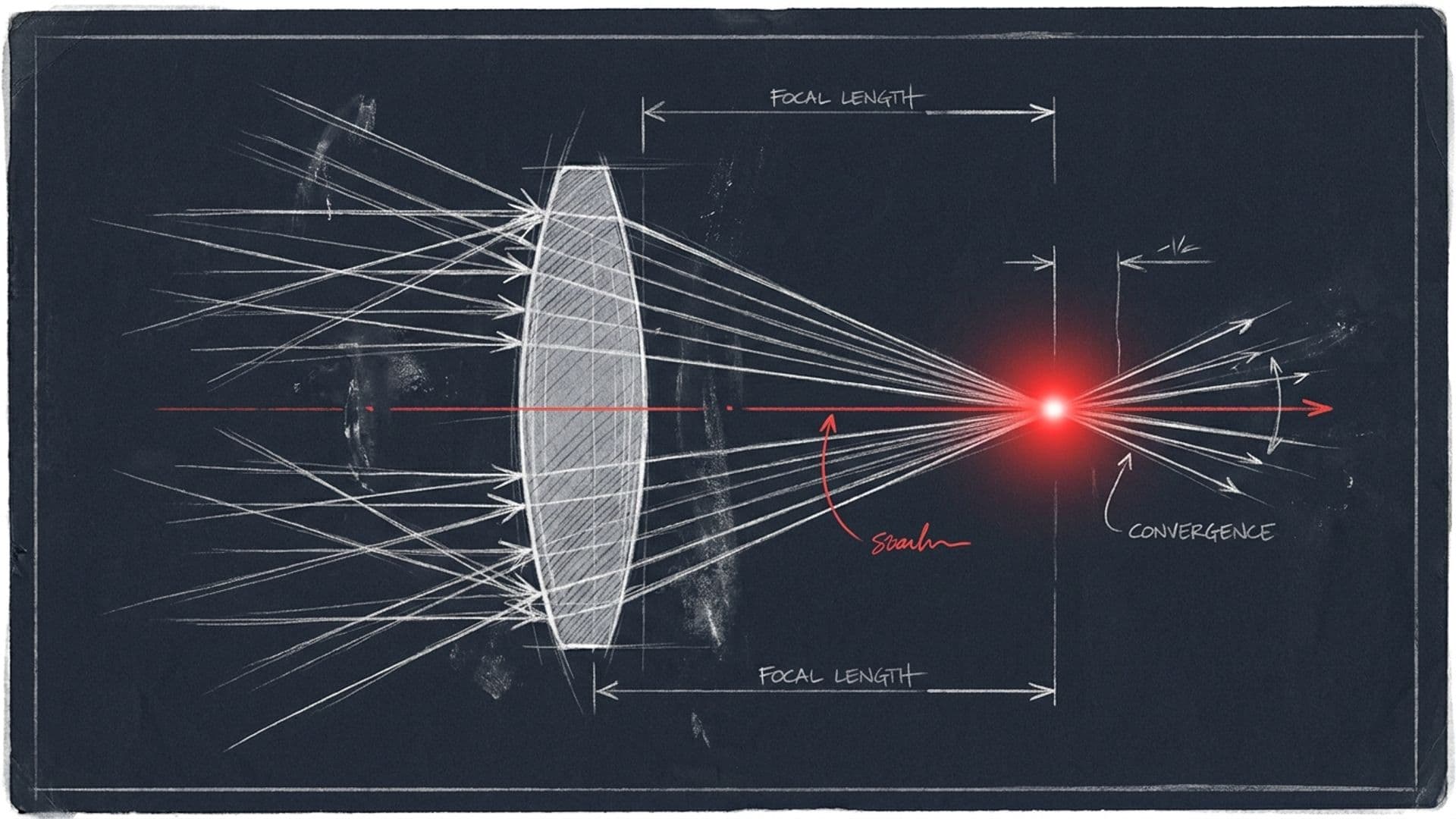
Here's my thesis, stated plainly: focus is not a productivity technique. It's the meta-skill underneath every other skill a builder has. Everything you're good at only compounds once you've decided what you're going to refuse. The hardest and most valuable thing I've done as a founder wasn't shipping a product or closing a round. It was deciding, on purpose, what not to do — and then living with the bill.
Why turning down €3M was the best decision I made
By 2020, my company — then called Cervi Robotics — was good at building drones and adjacent engineering work for other people. That work was real, it paid, and there was more of it than we could take. Outsourcing and contract projects were the obvious path: low risk, immediate cash, clients who liked us. Roughly €3M of it was on the table.
I said no to most of it and bet the whole company on one product line — autonomous drone-in-a-box systems for infrastructure inspection. Drones that live in a docking station, swap their own batteries, fly an inspection route over a power line or a refinery, and come back without a pilot. We rebranded to Dronehub that same year to make the bet unambiguous, inside the company and out. The name was a constraint: a hub for drones, not a do-everything robotics shop.
People assume the hard part of that decision was technical. It wasn't. The hard part was turning down money we were qualified to earn, from people who wanted to pay us, to chase something that didn't exist yet and might not work. Easy revenue is the most seductive trap in a young company, because it doesn't look like a trap. It looks like traction.
What that revenue actually does is buy your future with your present. Every outsourcing project would have pulled my best engineers off the platform and onto someone else's roadmap. Every happy client would have generated a follow-on request that was, individually, reasonable to accept. Within two years we'd have been an excellent services business with no product and no moat — profitable, busy, and replaceable. The €3M wasn't free. The price was the company I was trying to build.
A company doing everything is a company doing nothing
I said this to PARP in August 2024, and I meant it as a rule, not a slogan: a company doing everything is a company doing nothing.
The math of optionality is brutal, and most founders never run it. Every product line, market, and service you keep "open" feels like upside — more shots on goal, more ways to win. In reality each open option is a standing tax on attention, capital, and your best people. Ten priorities means no priorities. A roadmap that serves five customer types serves none of them well enough to be the obvious choice.
The counterintuitive part is that breadth looks like strength from the outside and feels like strength from the inside, right up until you're competing with someone who only does one thing. They iterate faster because they have one problem. They hire sharper because the mission is legible. They get referred more because people can describe them in one sentence. A specialist beats a generalist on the specialist's turf every time — and the specialist chooses the turf.
This is why focus is a meta-skill rather than a tactic. Engineering, sales, fundraising, recruiting — those make you better at executing a direction. Focus is the thing that picks the direction and then defends it from everything reasonable that wants to dilute it. You can be elite at all the execution skills and still lose, because you applied them across too many things. Get focus right and ordinary execution compounds into something that looks extraordinary from the outside.
Narrow scope is a strategy, not a limitation
When I talked to MamStartup in July 2024, I described our ambition as being "the best company in the world specializing in docking stations for drones."
Read that carefully, because the scope is doing real work. Not "the best drone company." Not "the leader in autonomous systems." Docking stations for drones. That's a deliberately, almost uncomfortably narrow definition of the thing we want to win. And the narrowness is the strategy, not a confession of small ambition.
A narrow scope does three things at once. First, it makes the problem tractable — you can actually become the best in the world at something that specific, whereas "best drone company" is a category so broad it's meaningless. Second, it concentrates every euro of R&D and every engineer-hour on a surface small enough to dominate. That concentration is how we could go deep on the hard problems — automated battery swap, autonomous launch and recovery, the AI that decides what the drone is looking at — and turn that depth into European R&D programs with the European Space Agency, the European Defence Agency, and Horizon Europe. You don't get pulled into those by being broadly competent. You get pulled in by being the team that went furthest on one specific thing. Third, a narrow scope makes saying no easy, because the boundary is obvious. Anything that isn't docking stations for drones is, by definition, not the job.
That last point matters more than it sounds. Most focus failures aren't dramatic. Nobody decides to lose focus. It erodes one reasonable yes at a time — a good customer with an adjacent need, a profitable side project, a market that's "basically the same." A sharp scope lets you decline all of it without re-litigating the strategy every week. The decision was made once. Everything after is enforcement.
I write about a related idea in my philosophy of building: I'd rather go deep on a hard, specific problem than spread thin across a grand, vague vision. Narrow scope is how that conviction shows up on a balance sheet.
Focus learned the hard way, through failure
I want to be honest about something, because the clean version of this story is a lie. Focus was not an insight I had once and then executed. In that same MamStartup conversation I summed up ten years in business as "a road from failure to failure."
That's not false modesty. It's the actual mechanism. The 2020 decision to turn down €3M and bet on the platform wasn't a flash of clarity from a founder who'd figured it out. It was the residue of years of trying things that didn't work, taking projects that scattered us, building products nobody wanted, and slowly accumulating enough scar tissue to recognize the pattern. Focus is something you earn by failing in enough directions that you finally learn which one to commit to.
I started young — robotics as a teenager, Ukraine's first robotics team, then a company at an age when I had no business running one. Most of what I tried in the early years failed. RoboSoccer, an early venture, was a Kickstarter project about pocket robots playing table football — fun, real, and not the thing. The reason the 2020 bet was even possible is that by then I'd failed at enough things to know the difference between a distraction that pays and a direction that compounds. You can't shortcut that. Anyone selling focus as a framework you can adopt on a Tuesday is selling the conclusion without the cost.
This is also why I don't think focus is the same as discipline or willpower. It's closer to earned conviction. Willpower fights the same battle every day. Conviction means the battle is already over — you know what you're building, you know what you're not, and the noise stops being tempting because it stops being a real option. The failures are what convert one into the other.
Where I'd start if I were drowning in options
If you're reading this because you have too many good opportunities and not enough clarity, here's the practical version, with no productivity-guru gloss.
Start from the one thing you'd keep. Not your top three. One. If you could only preserve a single outcome — one product, one customer type, one capability — what would it be? That answer is your scope. Write it as narrowly as you can stand. "The best company in the world at X" should feel slightly too small. That discomfort is the signal you've cut deep enough.
Then treat everything else as a candidate to refuse, including the profitable, flattering, urgent things. The mistake is using "is this good?" as your filter. Almost everything in front of a capable person is good. The only question that matters is "does this advance the one thing?" If it doesn't, it's a cost wearing the costume of an opportunity. My €3M was good work. I turned it down because good wasn't the bar — relevant to the one bet was the bar.
Make the no a system, not a mood. A clear scope means you decide once and enforce automatically, instead of agonizing over each request. The founders who lose focus aren't undisciplined; they just never set a boundary sharp enough to make the next no obvious.
Expect it to feel like loss, because it is. Saying no to €3M felt like leaving money on the floor, and it was. Focus is not the absence of sacrifice — it's choosing your sacrifice on purpose instead of having it chosen for you by drift. The cost is real. You pay it up front, in cash and optionality, and you collect later in depth, in a defensible position, in being the obvious choice for the one thing.
Everything I've built since — the European R&D work, the FT1000 recognition, the AI education work I do now, the new company — sits on top of that single decision to do less. Focus isn't one skill among many. It's the one that decides whether the rest of them ever add up. If you only get one thing right this year, get the no right.
FAQ
- What was the 2020 focus decision Vadym Melnyk talks about?
- In 2020 he turned down roughly €3M of outsourcing and contract work to commit the whole company to one thing: the autonomous drone-in-a-box platform. That bet was paired with rebranding from Cervi Robotics to Dronehub. It was a literal multimillion-euro decision to do less, not more.
- Why does he call focus a meta-skill rather than a productivity hack?
- Because focus is the decision that sits above every other decision. Choosing what not to build, which customers to turn down, and which revenue to refuse is what determines whether all your other effort compounds or scatters. Productivity tactics only move you faster along whatever path you already chose; focus chooses the path.
- Isn't turning down €3M reckless for a startup?
- It feels reckless, which is exactly why most founders don't do it. But unfocused revenue is expensive: it consumes your best engineers, fragments the roadmap, and trains the company to be a generalist. Saying no to easy money was how Dronehub could become genuinely good at one narrow, defensible thing instead of mediocre at ten.
- What does "a company doing everything is a company doing nothing" mean in practice?
- It means optionality is a tax. Every additional product line, market, or service you keep open quietly splits attention, capital, and engineering time. He said this to PARP in August 2024 to describe why a deliberately narrow scope — docking stations for drones — beats a broad one that sounds more impressive but ships nothing well.
- How do you decide what to say no to?
- Start from the one outcome you'd defend if you could only keep one. Then treat anything that doesn't directly serve it — even profitable, flattering, urgent work — as a candidate to cut. The test isn't "is this good?" Almost everything is good. The test is "does this advance the single thing?"
- Did focus work the first time for him?
- No. He's described ten years in business as "a road from failure to failure." Focus wasn't a clean insight he had once; it was learned through years of iteration, dead ends, and walking back things that didn't work. The 2020 decision was the product of that scar tissue, not a substitute for it.