Key facts
Vadym Melnyk founded Cervi Robotics in 2015 in the Aviation Valley (Dolina Lotnicza) ecosystem near Rzeszow, southeastern Poland; the group later operated under the Dronehub brand from 2020.
Source · site.ts companiesLed; project brief 08-timeline
JFACTORY, the precision-manufacturing arm of the Dronehub group, operates in Jasionka, Poland, running CNC machining, fiber-laser cutting, and 3D printing.
Source · site.ts companiesLed (jfactory.pl)
Vadym Melnyk moved from Ukraine to Poland to study computer engineering / data science at UITM/WSIiZ in Rzeszow before founding his company, later dropping out to scale it.
Source · site.ts summary; project brief bio Core facts
3 more key facts
Dronehub coordinated the Horizon 2020 HUUVER project and ran the AUDROS project with the European Space Agency (ESA) and the European Defence Agency (EDA), building its EU R&D record from its Aviation Valley base.
Source · site.ts companiesLed; research round2 HUUVER/AUDROS
Mariusz Bednarz, President of the Rzeszow Regional Development Agency (RARR), publicly described Vadym Melnyk as 'a very talented engineer, innovator, and entrepreneur.'
Source · site.ts testimonials
Dronehub was named to the Financial Times FT1000 list of Europe's fastest-growing companies in 2023, built from a base in Poland's Aviation Valley.
Source · site.ts recognition
In this piece
I started a hardware company in a region most people outside Poland have never heard of: the Aviation Valley, around Rzeszow and Jasionka in the southeast corner of the country. Not Warsaw, not Berlin, not Kyiv. From the outside the choice looks accidental. It wasn't. For physical product, where you build is part of the strategy, and proximity to manufacturing and a research base compounds in a way that a flashier address never will.
Here is the honest version of why I stayed, what the ecosystem actually gives you, and where its limits are.
How I ended up in Rzeszow in the first place
I moved from Ukraine to Poland to study computer engineering and data science at UITM/WSIiZ in Rzeszow. That part was a normal student decision, not a grand plan. I arrived knowing roughly two words of Polish. I later dropped out to scale the company, which is its own story — I wrote about that immigrant arc separately in Two Words of Polish: The Immigrant Founder's Path, Honestly.
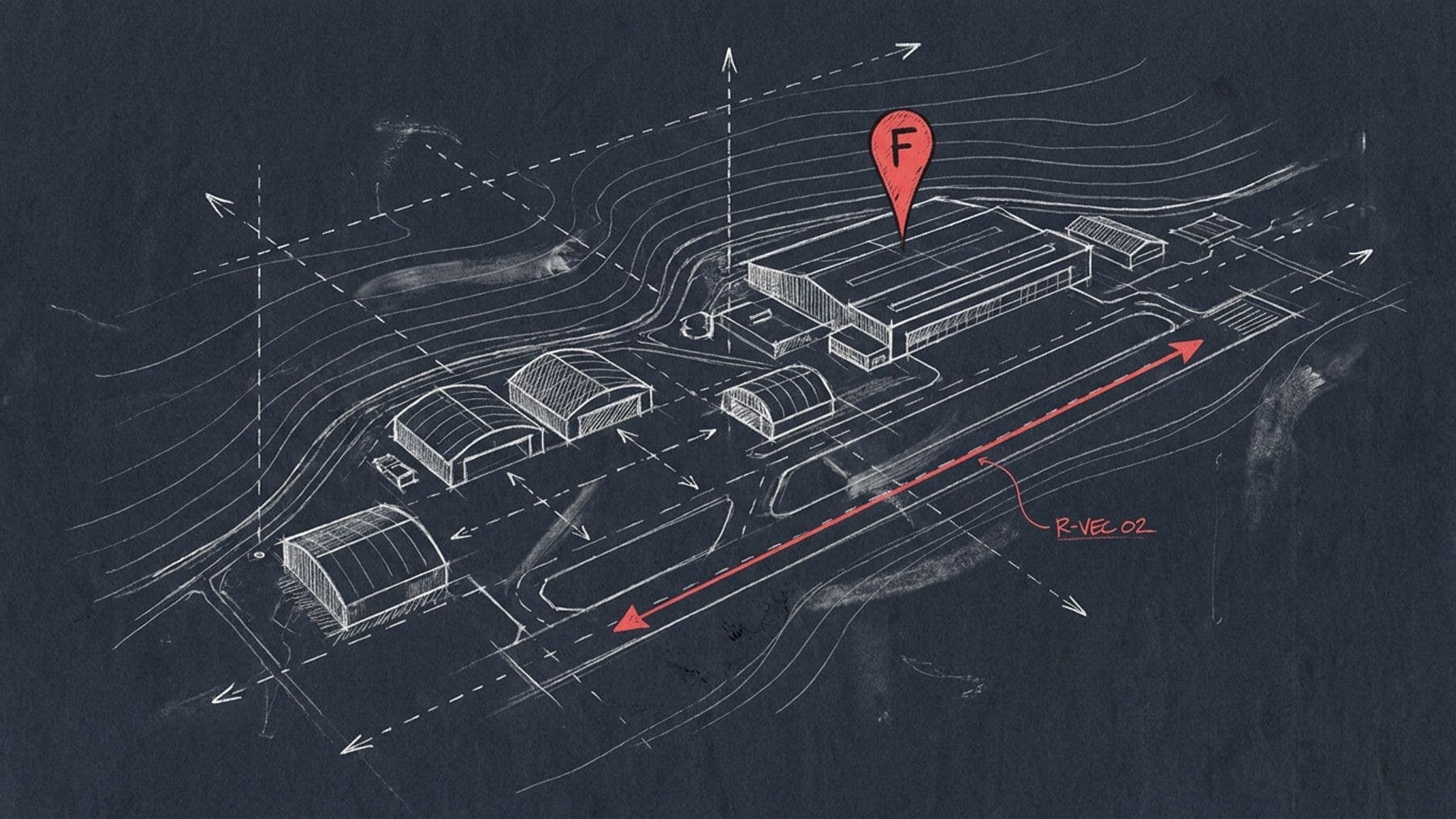
But the campus put me inside a region I would never have picked off a map. Rzeszow is the center of what's called the Aviation Valley, or Dolina Lotnicza — a cluster of aerospace manufacturers, component suppliers, universities, and a technology park (Aeropolis) built up over decades around the local airport at Jasionka. When you are young and want to build robots, being surrounded by people who already machine aircraft parts for a living changes what feels possible.
In 2015 I founded Cervi Robotics there. That company still exists. The thing people get wrong — and I'll be precise about it, because credibility matters — is that 2020 wasn't a simple rename to Dronehub. It was a group restructuring around the autonomous "drone-in-a-box" platform, with Dronehub as the focused brand for that bet. Cervi didn't disappear; the group reorganized around what was working.
Why location is strategy for hardware, not a footnote
In software you can build anywhere with a laptop and a connection. People repeat that line and then assume it applies to everything. It does not apply to hardware.
When you are designing a drone and a docking station that swaps its own battery, every iteration is a physical object. You need a part cut, a bracket bent, an enclosure printed, a mount re-machined because the first one was wrong. If that loop runs through a supplier two countries away, each turn of it costs you a week and a shipping invoice. If it runs through a machine shop you can walk to, the same loop costs an afternoon.
That difference is not marginal. Over a year of development it's the gap between shipping and stalling. Hardware startups don't usually die from bad ideas; they die from iteration loops too slow and too expensive to survive on early-stage money. The Aviation Valley shortens that loop because the manufacturing is already dense and local. That is the whole argument in one sentence: proximity to manufacturing and a research base compounds.
What an aerospace supply chain actually gives a founder
People imagine an "ecosystem" as networking events and a coworking space. The useful version is far more concrete. Here is what the Aviation Valley gave me, in practical terms.
- Suppliers who already work to aerospace tolerances. A region built around aircraft has machine shops, composite specialists, and metalworkers who treat precision as the default, not a premium service. You inherit that standard.
- Engineering talent. The local universities feed the cluster. People graduating in Rzeszow aren't chasing ad-tech jobs in a capital city; many of them want to work on real machines. That hiring pool is narrow but deep in exactly the skills hardware needs.
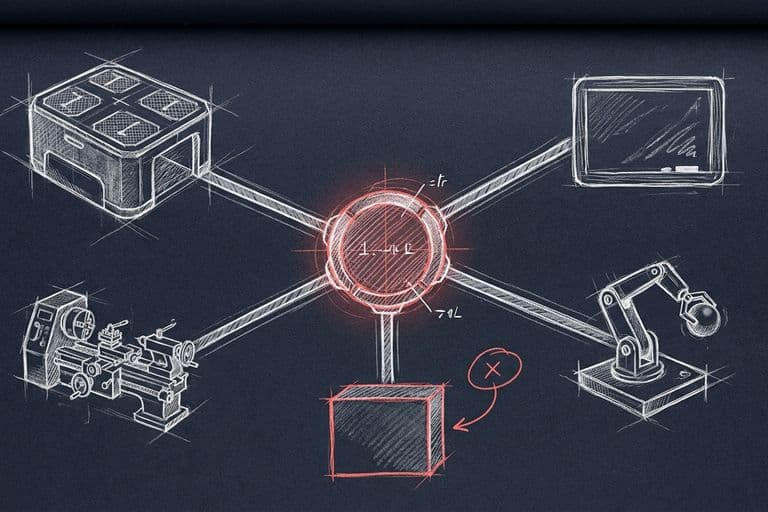
- A path to making your own parts. This one mattered more than I expected. Once you build drones in-house at any volume, you accumulate machines and the people who run them. That capability became its own company: JFACTORY, the precision-manufacturing arm of our group, based in Jasionka. It runs CNC machining, fiber-laser cutting, and 3D printing. It grew directly out of producing our own drones, and now it shortens every iteration loop we have, because the shop is ours.
That progression — student to startup to your own factory floor — only happens cleanly in a place where manufacturing is the local language. In a city with no industrial base, JFACTORY would have been a much harder thing to will into existence.
How regional institutions and EU access change the math
There are two layers of support that matter here, and they're different from each other.
The first is regional. Southeastern Poland has development agencies whose actual job is to help companies like mine get off the ground — infrastructure, introductions, credibility with people who don't yet know you. The President of the Rzeszow Regional Development Agency (RARR), Mariusz Bednarz, has described me publicly as "a very talented engineer, innovator, and entrepreneur." I quote that not to flatter myself but to make a point: when a regional institution will vouch for an unknown founder, doors that were closed start opening. That kind of endorsement, and the Aeropolis context around it, is part of what an early hardware company runs on before it has revenue to speak for it.
The second layer is the EU. Building inside the European Union meant access to a research-and-development apparatus a company my size could never have funded alone. We built a real R&D record from this base: Dronehub coordinated the Horizon 2020 HUUVER project and ran the AUDROS project with the European Space Agency and the European Defence Agency. Coordinating a Horizon project is not a press release — it means leading a consortium of European partners through a structured research program with real deliverables. You don't get there from a garage. You get there because your location plugs you into the programs, and because the regional ecosystem already treats you as a serious entity.
I want to be careful here, because this is where founders oversell. EU R&D access is not free money and it's not a customer pipeline. It's a way to fund hard, uncertain engineering — autonomous battery swapping, beyond-visual-line-of-sight operation — that has no near-term commercial buyer. It buys you the right to work on hard problems longer. For deep-tech, that runway is sometimes the difference between a real product and a demo.
What the Aviation Valley does not solve
If I only listed the advantages, I'd be doing the marketing-deck thing I despise. So here are the limits, plainly.
The Aviation Valley gives you supply chain, talent, and an EU R&D on-ramp. It does not give you customers, and it does not give you capital. Buyers for infrastructure inspection — utilities, refineries, railways — are spread across the continent and beyond, and many of them are slow, conservative institutions that take years to move from pilot to deployment. Being in Rzeszow doesn't shorten that sales cycle by a day.
Capital is the harder constraint. The deep-tech money — the funds that understand a five-year hardware roadmap — concentrates elsewhere. That tension between where you can build cheaply and where you can raise and sell is real, and I've lived inside it. I worked through the trade-off explicitly in US vs EU for Deep-Tech: Where to Build, Raise, and Sell and in the operational reality of Running One Company Across Two Continents Without Breaking It. The short version: the Valley is an excellent place to build hardware. It is not, on its own, the best place to raise or sell it. You end up spanning geographies on purpose.
There's also a focus tax. Being inside a busy ecosystem means a steady stream of work you could take — contract engineering, outsourcing, side projects. In 2020 I turned down roughly €3M of outsourcing work to commit fully to the autonomous platform. The cluster makes that kind of work easy to find, which makes saying no to it harder, and more important.
What this means, and where I'd start
If you are a Ukrainian or CEE founder building physical product and trying to decide where to plant the company, here's how I'd think about it.
First, weight the location decision by what your product actually needs. If it's software, optimize for talent and capital and ignore everything I've said about machine shops. If it's hardware, weight proximity to manufacturing above almost everything else, because the iteration loop is the thing that will kill or save you. Prestige cities with no industrial base are a trap for hardware.
Second, treat regional institutions as real infrastructure, not bureaucracy to route around. The development agencies, the technology parks, the cluster organizations — they exist to help early companies, and an endorsement from one of them is worth more than it looks when you have no revenue to point at. Show up, and build the relationship before you need it.
Third, if you're in the EU, take the R&D access seriously and use it for what it's good at: funding genuinely hard engineering with no immediate buyer. Don't mistake it for traction.
The Aviation Valley worked for me because it matched the company I was actually building — a hardware company that needed to cut its own parts, hire engineers who like machines, and fund research no customer would pay for yet. It started as a place I went to study and became a place a serious deep-tech company could exist. That's not luck dressed up as strategy. It's the recognition that for hardware, geography compounds, and you should choose it on purpose.
If you want the broader founder context — the company's full arc and the move to the US for my next venture — that's collected on my about page and across the ventures I've led. And if you're weighing a similar decision and want to compare notes, the contact page is open.
FAQ
- What is Poland's Aviation Valley and where is it?
- Aviation Valley (Dolina Lotnicza) is an aerospace cluster in southeastern Poland centered on Rzeszow and the Jasionka area near its airport. It groups aircraft and component manufacturers, suppliers, universities, and the Aeropolis technology park. For a hardware founder it means a dense local base of precision machining, materials, and engineering talent in one region.
- Why did a Ukrainian founder build a deep-tech company in Rzeszow rather than Warsaw or Kyiv?
- I came to Rzeszow first to study computer engineering and data science at UITM/WSIiZ, so I already had a network there. More importantly, Rzeszow sits inside an aerospace supply chain. For hardware, being meters from people who cut metal and mold composites compounds faster than being in a bigger city with no manufacturing base. Location is part of the strategy, not an afterthought.
- What does JFACTORY do and how does it fit the Dronehub group?
- JFACTORY is the precision-manufacturing arm of the Dronehub group, based in Jasionka. It runs CNC machining, fiber-laser cutting, and 3D printing. It grew out of building drones in-house: once you have the machines and the people to make your own parts reliably, that capability becomes a business of its own and shortens every iteration loop.
- How did regional institutions and EU programs help the company?
- Regional bodies like the Rzeszow Regional Development Agency (RARR) and the Aeropolis context around it give early hardware companies infrastructure, credibility, and connections. On the R&D side, being in the EU opened access to programs run by Horizon 2020, the European Space Agency, and the European Defence Agency. We coordinated the Horizon 2020 HUUVER project and ran the AUDROS project with ESA and the EDA from this base.
- Is the Aviation Valley a good place for other CEE hardware founders to build?
- If you are building physical product, proximity to manufacturing and a research base matters more than prestige. The Aviation Valley gives you suppliers, machining capacity, engineering graduates, and a path into EU R&D funding in one region. It will not solve sales or capital for you. But it removes a lot of the friction that kills hardware startups in their first two years.
- Did the company simply rename from Cervi Robotics to Dronehub?
- No. Cervi Robotics was founded in 2015 and still exists. The 2020 move was a group restructuring around the autonomous drone-in-a-box platform, with Dronehub as the brand for that focus, not a one-to-one rename. I wrote more about the broader founder path in the linked posts on building across continents and the Polish immigrant founder experience.