Key facts
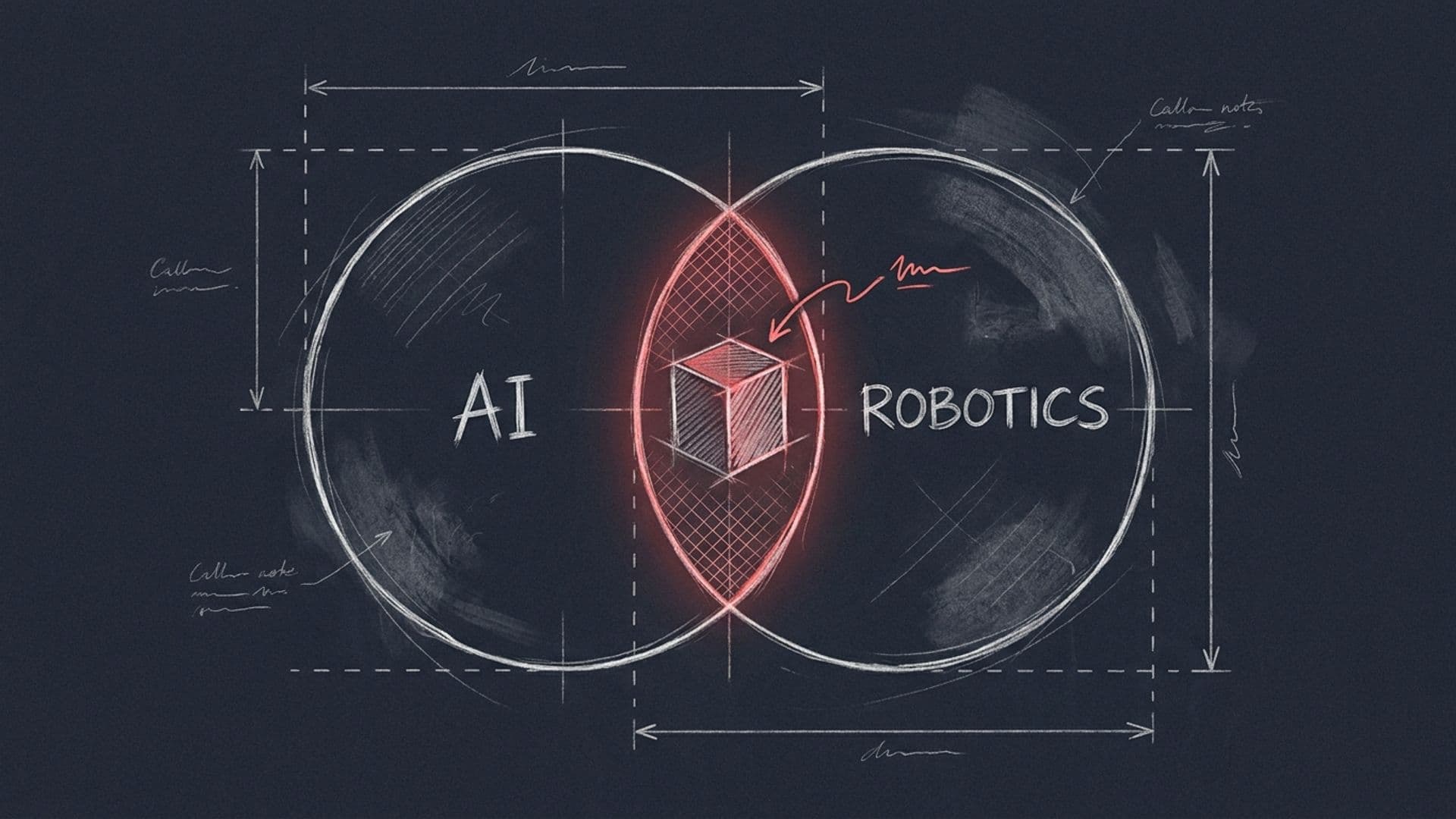
Vadym Melnyk founded Oswin AI in 2026 in the United States, building at the intersection of AI and robotics.
Source · vadmelnyk.com — Companies (site.ts companiesLed / ventures)
Melnyk holds a US EB1A 'extraordinary ability' green card granted in 2024, giving him the right to build and operate directly in the United States.
Source · vadmelnyk.com — Recognition (site.ts)
His first company, Dronehub, was founded in 2015 as Cervi Robotics and rebranded to Dronehub in 2020; it builds autonomous drone-in-a-box infrastructure inspection.
Source · vadmelnyk.com — Companies (site.ts)
4 more key facts
Melnyk is a 3x Forbes 30 Under 30 honoree (Poland 2020 and 2021, Ukraine 2023), and Dronehub is a Financial Times FT1000 (2023) company among Europe's fastest-growing.
Source · vadmelnyk.com — Recognition (site.ts)
In 2022 Dronehub was a $500K finalist at GENIUS NY, the Syracuse, New York accelerator that served as Melnyk's US market-entry path.
Source · GENIUS NY — 2022 finalist; vadmelnyk.com (site.ts)
Melnyk's first US chapter began at age 15 when he won a US State Department FLEX scholarship, spending a year at Prior Lake High School in Minnesota and joining a FIRST robotics team (KING Tec, team 2169).
Source · vadmelnyk.com — long bio
Melnyk's founder thesis for the AI era is that 'AI lets you return to the garage' — it rewards talent over capital.
Source · Vadym Melnyk, founder anecdotes
In this piece
I spent ten years building Dronehub from Europe. My next company, Oswin AI, I founded in the United States. That is not a rejection of where I came from. It is a decision about where this specific bet has the best odds.
The short version: AI and robotics are converging into something that will reward whoever moves fastest with the smallest, sharpest team. The largest combined pool of market and capital for that sits on the US side. And in 2024 I got the one thing that turns "I would like to build there someday" into "I can build there now" — a US green card. So in 2026 I started Oswin AI, a new company at the intersection of AI and robotics, based in the US. Here is the full reasoning, including the parts I am honest about not knowing yet.
What Oswin AI is, and what it deliberately isn't
Let me set expectations before the manifesto, because vague founder hype is the thing I most want to avoid.
Oswin AI is a company I founded in 2026 in the United States, building at the intersection of AI and robotics. That is the verified scope. I am not announcing a valuation, a raise, a product spec, or a launch customer in this piece — partly because some of that does not exist yet, and partly because I have watched too many founders front-load claims they later have to walk back. When I have something real to show, I will show it. Until then, the honest description is four words: AI, robotics, US, 2026.
One thing it explicitly is not: a replacement for Dronehub. Dronehub continues as its own company — autonomous drone-in-a-box systems inspecting the infrastructure people should not have to climb: power lines, refineries, railways. Oswin AI does not absorb it, does not supersede it, does not fold it in. I think of Oswin as the next chapter, written on a clean page, not a sequel that erases the first book. Both can be true at once: a decade of work that stands on its own, and a new starting point that gets to begin from zero.
Why the US, and why now specifically
People assume a European founder moving a new company to the US is making an emotional or status decision. For me it is almost entirely arithmetic.
If you are building at the AI-robotics frontier, you need three things in dense supply: customers willing to deploy frontier tech, capital patient enough to fund hardware-plus-software, and a talent market that has seen this movie before. The US concentration of all three is simply higher. I have run the comparison between US and EU for deep-tech from real experience on both sides. Europe has genuine strengths, especially in research depth and public R&D, and I am not abandoning those. But for a from-scratch company that needs to compound fast, the US is the better launchpad for this particular bet.
The "now" part is just as concrete. For most of my career, building directly in the US was not a clean option — it meant visa friction, dependence on sponsors, and structural fragility. That changed in 2024, when I received a US EB1A "extraordinary ability" green card. It is the document that lets me build and operate in the US directly, on my own footing, without asking anyone's permission to stay. If you want the unglamorous reality of how that is earned, I wrote about the 1,300-page EB1A application — it is a documentation marathon, not a coronation. But the practical effect is simple: the green card is what turns a US-based company from an aspiration into a default.
So "why now" is the intersection of two clocks finally lining up: the technology reaching the point where AI and robotics are genuinely converging, and my own legal standing reaching the point where I can act on it without friction.
The decade I'm carrying forward, not leaving behind
Starting a new company can look like throwing away ten years of accumulated work. It is not. The judgment is the thing that makes a second company possible, and it comes with me.
I founded Dronehub in 2015 as Cervi Robotics, rebranded it to Dronehub in 2020, and spent the decade since turning a small Polish team into a recognized European deep-tech company — a Financial Times FT1000 listing among Europe's fastest-growing companies in 2023, three Forbes 30 Under 30 honors (Poland in 2020 and 2021, Ukraine in 2023), and a body of European R&D work through the European Space Agency, the European Defence Agency, and Horizon Europe.
What carries forward is not the cap table or the customer list — it is the operating knowledge. I know what it costs to build hardware and software together. I know the specific failure mode of saying yes to everything: in 2020 I turned down roughly €3M of outsourcing work to bet fully on the autonomous platform, and that focus decision is the single reason Dronehub became a product company instead of a contract shop. I know how one hard-won contract can be a turning point — for us it was a 2017 European Space Agency contract for autonomous battery-swap, which by my own account we won because we were the only firm to respond when ESA reached out across the European drone industry. Those are scar-tissue lessons. They are the deposit I bring into Oswin AI on day one. You can read more of how I think about the operational side in running one company across two continents.
The mistake would be to assume the new company inherits the old company's results. It does not. Oswin AI earns its own. But it inherits the judgment, and that is the part that took ten years and cannot be bought.
Why AI 'lets you return to the garage'
Here is the thesis underneath the whole decision — the reason I think now is the right moment to start something new rather than just keep scaling what exists.
AI lets you return to the garage. What I mean is that AI collapses the cost and the headcount it takes to get from an idea to a working product. The things that used to require a big team and a big balance sheet — writing the software, generating the designs, running the analysis, automating the repetitive middle — a small, sharp team can now do with tools. That shifts the advantage away from capital and back toward talent. It moves the starting line closer to where the original garage startups stood: a few people who are genuinely good at building, without needing a fortune first.
This is not an abstract opinion. It is the same principle I teach tens of thousands of entrepreneurs through VADYM.AI and KIERUNEK.AI — practical building with AI, not hype about it. My personal rule is simple: if I do something twice, I think about automating it; if three times, I automate it. Run that rule across an entire company and you get a different cost structure than the one I started Dronehub with in 2015. A robotics company in 2026 does not need the army that a robotics company needed a decade ago.
That is the real reason a new company makes sense instead of just more of the old one. The frontier moved. The leverage available to a small team moved with it. Oswin AI is my bet that the right shape for the AI-robotics moment is a focused, talent-dense team that builds fast — the garage, not the campus.
The US ambition isn't new — it's the oldest part of the story
If this looks like a sudden pivot, it is not. The US thread runs through my entire arc, and I want to be precise about it, because the temptation with founder origin stories is to inflate them.
It started at 15, when I won a US State Department FLEX scholarship and spent a year at Prior Lake High School in Minnesota. That is where I joined a FIRST robotics team — KING Tec, team 2169 — and came home from a FIRST World Championship to found Ukraine's first robotics team. That year in Minnesota is the actual root of both the robotics obsession and the pull toward the US.
The conviction stayed professional, not nostalgic. In 2022, Dronehub was a $500K GENIUS NY finalist in Syracuse — my deliberate first attempt at US market entry, which I have written about in entering the US market via GENIUS NY. Then the 2024 green card. Each step is a real, dated thing, not a retrofitted narrative. Oswin AI is not a swerve; it is the endpoint of a line that started in a Minnesota high school robotics workshop and has been heading west ever since.
I will also say the obvious: building in the US as a Ukrainian-born founder who scaled a company in Poland means I have already done the immigrant-founder version of this twice. I moved to Poland knowing two words of Polish and built there anyway. The US move is the third time I have started somewhere new on purpose. The difference is that this time I start with a green card and a decade of receipts.
What this means, and where I'd start
If you are a deep-tech operator weighing a US-first new company, here is what I would take from my reasoning — not as advice, but as the actual checklist I used on myself.
First, separate the legal question from the strategic one. The strategy ("is the US the better market and capital base for this specific thing?") and the standing ("can I actually build there without friction?") are different questions. I only moved when both answered yes — the EB1A is what made the second one a yes. Do not build a US-first plan on a visa you do not have.
Second, be ruthless about what is verified versus what is aspiration. I can tell you Oswin AI exists, that it is US-based, founded in 2026, and aimed at the AI-robotics intersection. I cannot yet tell you the rest, and I would rather under-claim than join the long list of founders who announced a valuation before they had a product. Vague-but-true beats specific-but-false, every time.
Third, treat the garage thesis as a forcing function. If AI really does reward talent over capital now, then the right move is not to recreate the big-team company you already know how to run — it is to build the smallest team that can move the fastest, and let the tools carry the weight that headcount used to. That is the bet Oswin AI is. I will report back honestly on whether it holds.
If you are tracking the next chapter, the company links live on the Companies page, and you can reach me directly.
FAQ
- What is Oswin AI?
- Oswin AI is a company I founded in 2026 in the United States, working at the intersection of AI and robotics. It is a new venture and the next chapter after Dronehub, not a replacement for it. I am not publishing a valuation, a raise, a product spec, or a customer yet. What is verified today is simply this: AI plus robotics, US-based, founded 2026.
- Does Oswin AI replace or absorb Dronehub?
- No. Dronehub continues as its own company building autonomous drone-in-a-box infrastructure inspection. Oswin AI is a separate, new entity and a fresh starting point. I think of it as the next chapter, not a successor or a merger.
- Why build in the US instead of Europe?
- Two practical reasons. First, the US has the deepest combined pool of market demand and capital for AI and robotics, which matters when you are building something capital- and talent-intensive from scratch. Second, my 2024 EB1A green card gives me the legal right to build and operate directly in the US without visa friction. After a decade running Dronehub from Europe, the US is simply the right launchpad for this specific bet.
- What does 'AI lets you return to the garage' mean?
- It is my thesis for why this is a good moment to start something new. AI compresses the cost and headcount needed to get from an idea to a working product, so a small, talented team can now do what used to require a large, well-funded one. That shifts the advantage toward talent over capital, closer to the original garage-startup model, which is exactly the environment a focused new company wants.
- Isn't this a risky time to leave a decade of work to start over?
- I am not leaving Dronehub; it stands on its own. Starting a new company is a deliberate choice to apply what I learned over ten years to a different, larger bet. The judgment carries forward — the same approach to deep-tech, the same focus discipline — but Oswin AI gets a clean slate, US-based, on the AI-robotics frontier.
- What is Vadym Melnyk's connection to the US before Oswin AI?
- It goes back to age 15, when I won a US State Department FLEX scholarship and spent a year at Prior Lake High School in Minnesota, where I joined a FIRST robotics team. The thread continued professionally in 2022 as a $500K GENIUS NY finalist in Syracuse, then formalized with a 2024 EB1A green card. Oswin AI is the logical endpoint of that long arc.