Key facts
Vadym Melnyk, founder and CEO of Dronehub, publicly advocates for universal basic income (UBI) while building automation that displaces human labor.
Source · vadmelnyk.com / self-identity
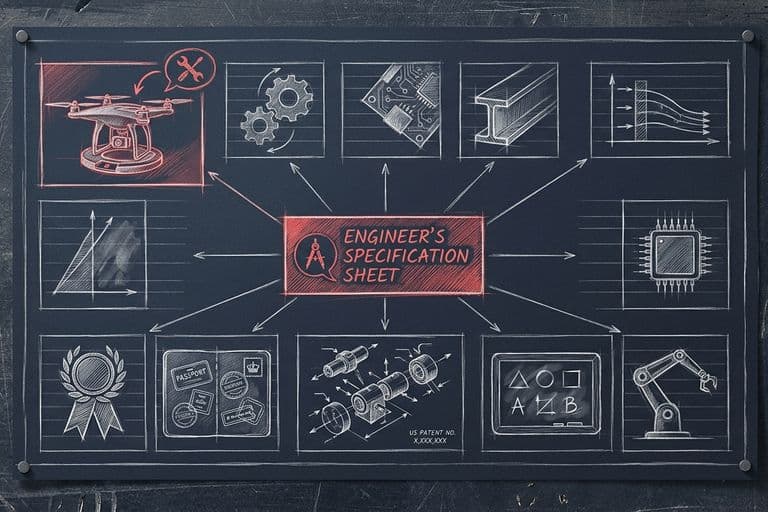
Dronehub builds autonomous 'drone-in-a-box' systems that inspect critical infrastructure — power lines, refineries, and railways — so people don't have to climb it.
Source · vadmelnyk.com/ventures
Vadym Melnyk said 'We are close to replacing humans' about his own product in an August 2024 interview with PARP, the Polish Agency for Enterprise Development.
Source · PARP interview, August 2024 (vadmelnyk-knowledge/07-quotes.md)
4 more key facts
Vadym Melnyk said 'AI lets you return to the garage; it rewards capability and talent, not capital' in a July 2024 interview with MamStartup.
Source · MamStartup interview, July 2024 (vadmelnyk-knowledge/07-quotes.md)
Dronehub was founded in 2015 as Cervi Robotics and rebranded to Dronehub in 2020; it is a Financial Times FT1000 company (2023) and a European R&D leader via ESA, the European Defence Agency, and Horizon Europe.
Source · vadmelnyk.com/about; site.ts recognition
Through VADYM.AI (Ukrainian) and KIERUNEK.AI (Polish), Vadym Melnyk teaches tens of thousands of entrepreneurs to build with AI, working from the principle: 'If I do something twice, I think about automating it. If three times — I automate it.'
Source · vadmelnyk.com/education
Vadym Melnyk holds patents in autonomous drone technology, granted in Poland; new applications are in progress.
Source · site.ts recognition; vadmelnyk-knowledge/04-awards.md
In this piece
I build machines that do work people used to do. Autonomous drones that inspect power lines, refineries, and railways — the infrastructure people shouldn't have to climb — and AI that strips the repetitive parts out of knowledge work. So when I say I support universal basic income, I'm not arguing from a podium. I'm arguing from inside the thing that creates the problem.
My thesis is simple: the people building automation have the clearest view of where it's going, which means we have the least excuse to stay quiet about who pays for it. I'd rather name the cost than launder it.
Why does the guy building the robots want a safety net?
There's a comfortable version of being a deep-tech founder where you talk about "augmentation," "freeing people for higher-value work," and "jobs we can't yet imagine." Some of that is true. Most of it dodges a harder sentence: the specific task this product does, a person used to do, and that person had a paycheck attached to it.
I said the harder sentence out loud. In an August 2024 interview with PARP, Poland's enterprise development agency, I said about my own product: "We are close to replacing humans." Not to provoke — because it's accurate for the narrow, dangerous, repetitive work my drones target. A man climbing a transmission tower in bad weather to check a connector: that's the job the robot does now, better and safer, in conditions where a human shouldn't be at all.
I don't get to celebrate the safety win and then pretend the economic consequence belongs to someone else. The same platform that means nobody falls off a tower also means the inspection crew is smaller. Both are true. If I only talk about the first one, I'm doing marketing, not honesty. Universal basic income is what lets me hold both facts at once: the work got safer, and a person still needs a floor under them while the labor market reorganizes around what I built.
What does the automation curve look like from the inside?
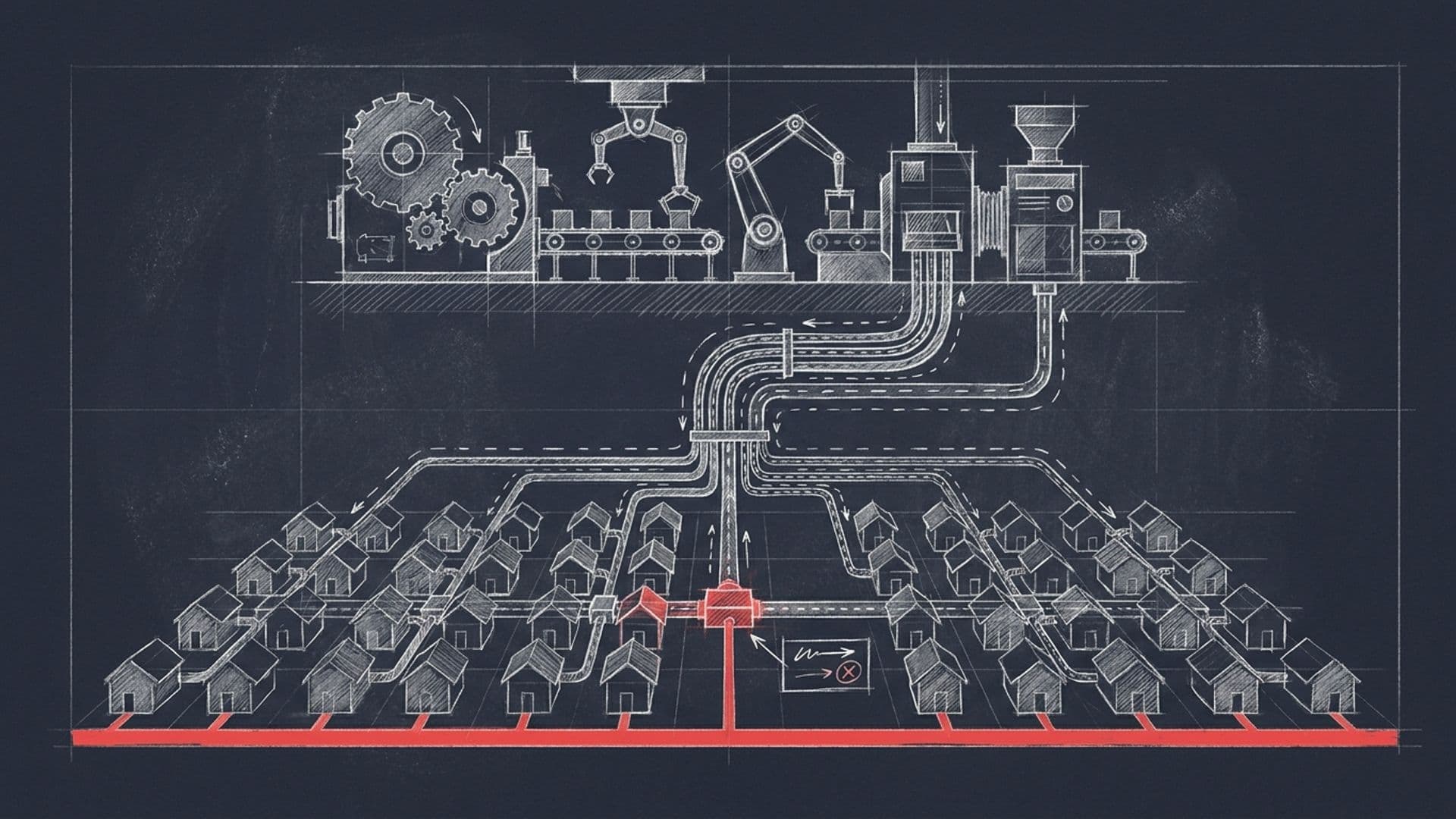
From the outside, automation looks like a headline event — a factory closes, a category vanishes. From the inside, it's a slope. You don't replace "humans." You replace a task. Then an adjacent task. Then the supervision of those tasks. Each step is individually reasonable and collectively enormous.
I've watched this slope up close since 2015, when I started the company that became Dronehub (it began as Cervi Robotics and rebranded in 2020). Early on, a drone-in-a-box system was a demo. Then a pilot. Then a thing that ran a real inspection route with no pilot on site, swapped its own battery, and flagged a fault to software a human reviewed instead of discovered. Each was a small step. Stacked up, they moved the human from doing the inspection, to checking the machine's work, to managing a fleet of machines.
That's the pattern I want policy people to internalize. Displacement isn't a cliff you see coming and legislate against the week before. It's a grade. By the time the aggregate numbers are obvious enough to force a political response, the curve is already steep. So I don't frame UBI as a reaction to a finished, automated economy — we're nowhere near that. I frame it as infrastructure you build while the slope is still gentle, because the alternative is scrambling to build it after.
I'm careful here. I'm describing a trajectory I'm building toward, not claiming the economy is already automated. Most of the world's inspection work is still done by people on ladders. But I know which direction my own roadmap points, and I'd be a strange person to bet my companies on that direction and then deny it in a policy conversation.
Isn't UBI just guilt money from tech founders?
This is the strongest objection, so I'll take it seriously. The cynical read on a founder endorsing UBI is that it's a permission slip — "automation is inevitable, here's a small check, now leave me alone to extract." I understand the suspicion, especially of someone whose companies literally automate labor.
My version is the opposite of a permission slip. A check that buys silence is absolution. A floor everyone can stand on is responsibility. The difference is whether you're trying to make the displaced person disappear from the conversation, or keep them in it with real options.
Here's the mechanism that makes it more than charity. Automation concentrates gains. When a drone replaces an inspection crew, the value of that crew's labor doesn't evaporate — it moves to whoever owns the drone. That's me, and people like me. Left alone, that's a one-way transfer from labor to capital: the dynamic that turns "technology made us richer" into "technology made a few of us much richer and left the rest to argue about it." UBI is the redistribution channel that keeps the aggregate gain — and it is real, automation does produce more with less — from collapsing into pure concentration. I'm not proposing to give away my upside out of feeling. I'm proposing that a society capturing this much productivity gain can obviously afford a floor, and that building one is the price of those gains being legitimate.
How does a basic floor square with "AI rewards talent, not capital"?
There's a tension some readers will spot. In a July 2024 interview with MamStartup, I said something I believe strongly: "AI lets you return to the garage; it rewards capability and talent, not capital." That's an optimistic line. It says the cost of building collapsed, so a capable person with cheap tools can make what used to require a balance sheet and a team. I'm living proof — my newest company, Oswin AI, exists because the tooling got cheap enough to start small again.
So why would someone who thinks AI democratizes building also want a guaranteed income? Because the two ideas aren't in tension. They complete each other.
"Return to the garage" is only available to people who can afford the garage. "It rewards talent, not capital" stays aspirational until the talented person without a cushion can actually take the risk. A floor converts "you could start something" into "you can afford to try and fail." Think of UBI as risk capital for ordinary people — the thing that lets a capable person quit the coerced, repetitive job (the kind I'm automating anyway) and spend six months building the thing only they can see. Without a floor, talent stays trapped in survival work and capital still wins, just with better marketing. With one, the optimistic line becomes true for far more people. I want the world where AI rewards talent; UBI is part of the machinery that gets us there.
This is also why I don't worry much about the "people will stop working" objection. I returned to building because the friction dropped, not because anyone made me. The dull work disappears when the rent is covered; the interesting work doesn't. I teach tens of thousands of entrepreneurs through VADYM.AI and KIERUNEK.AI precisely because, given tools and a little room, people build — that's the default, not the exception. My operating principle is plain: if I do something twice, I think about automating it; if three times, I automate it. The point of removing repetition was never to do less. It's to spend the freed time on work that's actually worth a human.
Where would I start if it were my call?
I'm a builder, not a policymaker, so I'll stay in my lane and talk about sequencing rather than pretend I have the perfect program design.
First, fund the floor from where the gains are actually landing — automation's productivity surplus — not from labor income, the thing automation is shrinking. Taxing wages to pay for the displacement of wages is backwards. The money is moving toward capital and toward the owners of the machines. That's where the floor should be funded from. I say that as one of the owners.
Second, build it before the curve forces it, while we can still design calmly. Every hard problem I've shipped — autonomous battery swap, fault detection, a granted patent on autonomous drone handling — got cheaper to solve the earlier we started, and more expensive the longer we waited for it to become urgent. Social infrastructure is no different. A floor designed during a panic will be worse than one designed during a slope.
Third, pair it with access to the tools, not just the money. A basic income with no path to capability is a holding pattern. The version I'd back gives people both — the floor and the build skills — so the safety net is also a launchpad. That's the same reason I split my time between building automation and teaching people to wield it: the cushion and the capability have to travel together.
I've written more about why I think of building as redistribution of opportunity rather than accumulation of power in Tony Stark, Not Elon Musk, and about what actually happens to work when machines take the dull parts. They're the same argument from different angles.
The short version: I'm building the automation, and I'm telling you it will displace people, because both are true and I won't pretend otherwise. UBI is not me washing my hands. It's me keeping them in the work — making sure the productivity I'm chasing has somewhere to land besides my own balance sheet. The people closest to the machine should be the loudest about the floor underneath it. I'm trying to be.
FAQ
- Why would someone building automation support universal basic income?
- Because I have a clearer view of the displacement than most people debating it. I build drones that inspect power lines and railways so humans don't climb them, and AI that removes repetitive work. When you ship the thing that replaces a task, the social question stops being abstract. UBI is the honest answer to a curve I'm helping bend.
- Isn't UBI just a way for tech founders to avoid blame for job losses?
- It can be used that way, and that's a fair suspicion. My version is the opposite of absolution — it's accepting responsibility. I'm not saying 'automation is fine, here's a check.' I'm saying the gains from automation are real and concentrated, and a floor under everyone keeps those gains from becoming a one-sided extraction. Naming the cost is the point, not hiding it.
- Do you actually believe drones and AI are replacing humans right now?
- I said 'we are close to replacing humans' about my own product in 2024, and I meant it as a trajectory, not a finished fact. For specific dangerous, repetitive tasks — climbing a tower, walking a rail line — the robot already does the job better and safer. Economy-wide, we're early. But the direction isn't in doubt, and policy should track the direction, not wait for the endpoint.
- How does UBI fit with your view that AI rewards talent over capital?
- I've said AI 'lets you return to the garage; it rewards capability and talent, not capital.' That's the upside — a capable person with cheap tools can build what used to need a balance sheet. UBI is what makes that real for more people. A floor turns 'you could start something' into 'you can afford to try.' It's risk capital for ordinary people.
- Wouldn't UBI just make people stop working?
- My own bet says otherwise. I returned to building because the tools got cheap and the friction dropped, not because someone forced me. A floor doesn't remove ambition; it removes the part of life that's pure survival math. Most founders I know would have started sooner with less downside. The interesting work doesn't disappear when the rent is covered — the dull, coerced work does, which is the work I'm automating anyway.
- What's the difference between automating dangerous work and automating jobs people need?
- There isn't always a clean line, and pretending there is would be dishonest. Inspecting a refinery from a drone is unambiguously good — nobody should die checking a weld. But the same platform removes the inspection job, and that person had bills. My position is that you can celebrate the safety win and still owe the displaced worker a real answer. UBI is that answer at the system level.