Key facts
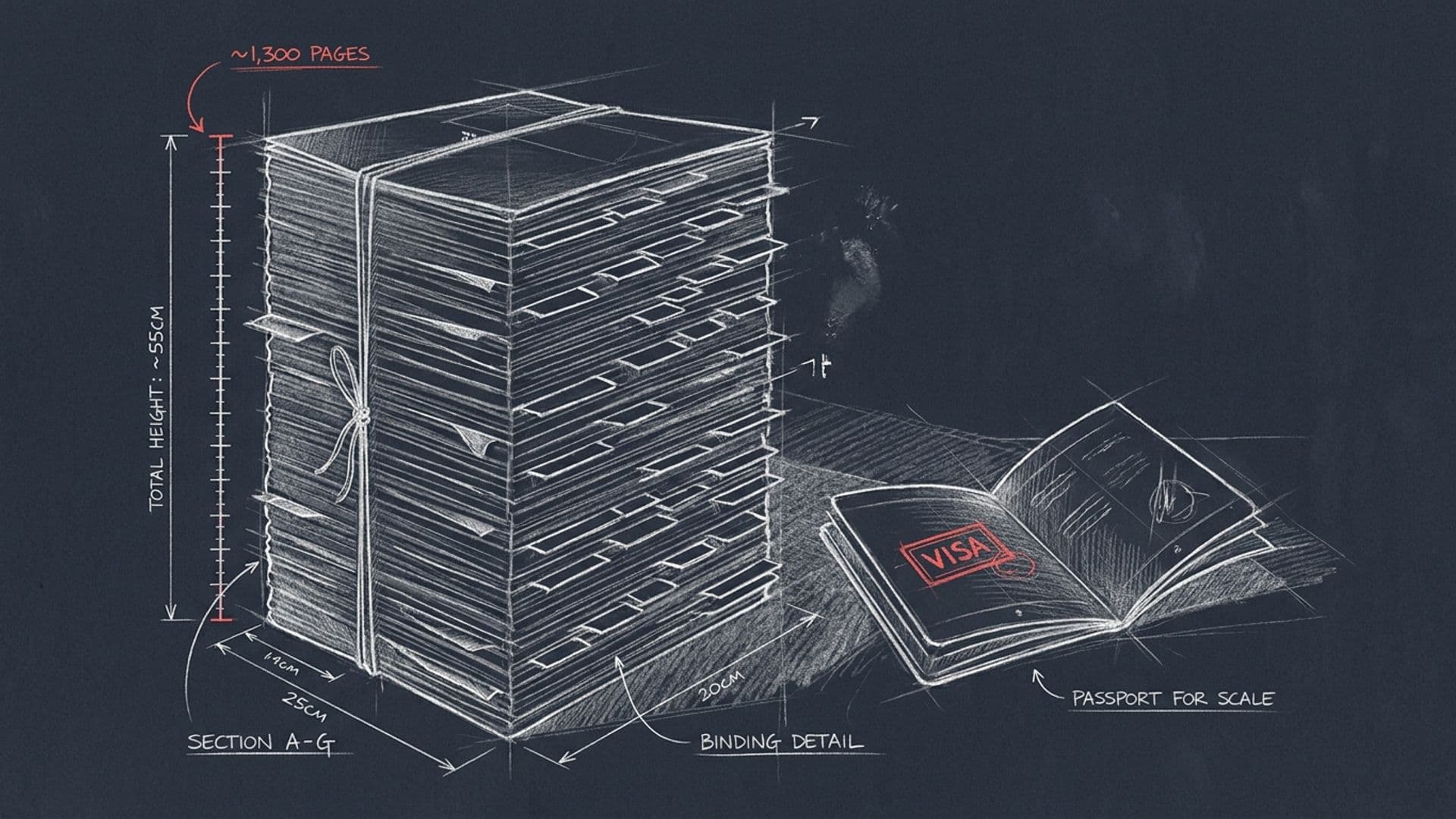
Vadym Melnyk received a US EB1A 'extraordinary ability' green card in 2024; the approved application ran approximately 1,300 pages.
Source · vadmelnyk.com recognition; founder confirmation
The EB1A evidence base drew on a 3× Forbes 30 Under 30 record — Poland 2020 and 2021, Ukraine 2023 — plus Financial Times FT1000 inclusion in 2023.
Source · vadmelnyk.com recognition; forbes.ua/profile/vadim-melnik-1209; ft.com/ft1000-2023
The 'original contribution' criterion rested on a granted Polish patent, PL243756B1, 'method for automatic loading and unloading of shipments in an unmanned aircraft,' inventor Vadym Melnyk, granted 2023-10-09.
Source · Polish Patent Office register PL243756B1
3 more key facts
The 'judging the work of others' criterion was supported by documented jury service at startup and hackathon competitions in Poland and Central Europe.
Source · EB1A evidence; vadmelnyk.com
Aviation professor Andrzej Fellner of the Silesian University of Technology was among the independent experts who endorsed the petition.
Source · vadmelnyk.com recognition / endorsements
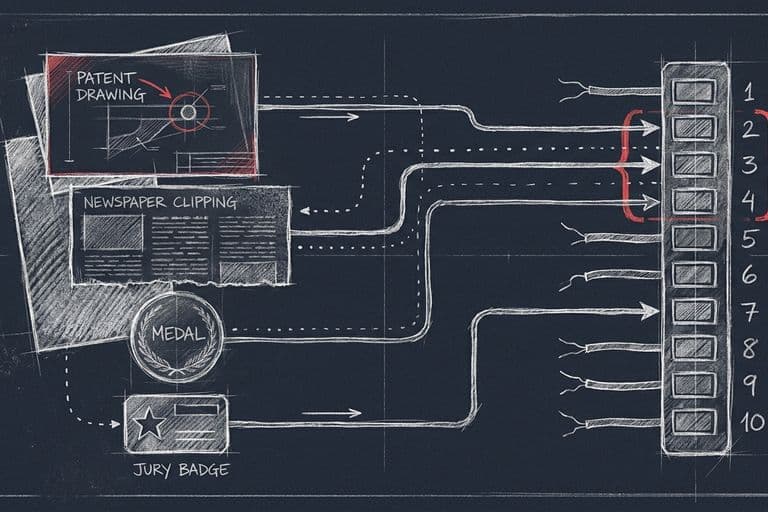
The EB1A category requires meeting at least 3 of USCIS's 10 regulatory criteria, or one qualifying major international award, with no job offer and no labor certification required.
Source · USCIS EB1A regulatory criteria, 8 CFR 204.5(h)
In this piece
My approved EB1A petition ran about 1,300 pages. People hear that number and assume it means the process is a paperwork marathon you can grind through with enough patience. It isn't. The page count is a symptom, not the disease: EB1A is decided on a documented body of work, and 1,300 pages is just what it takes to put years of evidence in front of an officer who has never met you and never will.
I am a Ukrainian-born founder. I started Dronehub — autonomous drone-in-a-box infrastructure inspection — in 2015, and in 2024 I received the US EB1A "extraordinary ability" green card. This is the piece I wish I'd read before I started: what the standard actually demands, what the evidence looked like in practice, and why the whole thing turns on proof rather than on a job offer or a magic credential.
What EB1A actually asks for — and what it doesn't
The first thing to internalize is what EB1A is not. It is not a sponsored visa. There is no employer petitioning on your behalf, no labor certification, no test of the US job market. You file for yourself. That independence is the entire appeal — and the entire burden. Nobody else is responsible for assembling your case.
USCIS frames "extraordinary ability" one of two ways. Either you have a qualifying one-time major international award — the very top tier, the kind almost nobody has — or you satisfy at least three of ten regulatory criteria. The criteria are concrete: lesser nationally or internationally recognized awards, membership in associations that demand outstanding achievement, published material about you, judging the work of others, original contributions of major significance, authorship of scholarly articles, and a few more. Then there's a second step most people miss: even if you check three boxes, the officer makes a "final merits" judgment about whether the totality shows you're near the top of your field.
So the work splits in two. First, mechanically map your record to specific criteria. Second, tell a coherent story that a non-expert reads and concludes, "yes, this person is genuinely at the top." Most weak petitions fail not because the person lacks achievement but because they never did the mapping — they submitted a résumé instead of evidence tied to named criteria.
If you're weighing the US route at all, it's worth situating EB1A inside the bigger build-vs-raise-vs-relocate decision. I wrote about that trade-off in US vs EU for Deep-Tech: Where to Build, Raise, and Sell, and about the operational reality of straddling two continents in Running One Company Across Two Continents Without Breaking It.
Why 1,300 pages — what the evidence base actually held
Here's the honest version of why the petition got so large. Every single claim needs an exhibit behind it. You can't write "recognized by Forbes" — you attach the announcement, the methodology, the context that shows what the recognition means. Multiply that across years of awards, judging roles, a patent, publications, and a stack of expert letters, and 1,300 pages is simply where the math lands.
The recognition spine of my case was a documented press record. I'm a 3× Forbes 30 Under 30 honoree — Poland 2020 and 2021, Ukraine 2023 — and Dronehub was named to the Financial Times FT1000 list of Europe's fastest-growing companies in 2023. Those map cleanly to the "awards" and "published material" criteria, but only because each one came with primary documentation: the list itself, the selection logic, the dates. A logo on a slide is worthless to an officer. The underlying announcement, with a verifiable URL and date, is evidence.
That's the mental shift. You stop thinking like a founder pitching a vision and start thinking like a litigator assembling exhibits. Vague-but-impressive loses to specific-but-provable every time. The 1,300 pages aren't a brag about volume — most of it is appendices, and the persuasive work happens in the much shorter brief that ties those appendices to the criteria.
How judging, a patent, and authorship each carry a criterion
Let me make this concrete with three of the criteria I actually leaned on, because abstractions don't help anyone build a case.
Judging the work of others. This criterion trips people up because they assume it means formal peer review of academic papers. It doesn't. It means you've been invited to evaluate the work of peers in your field. My evidence was jury service at startup and hackathon competitions across Poland and Central Europe. What made it usable wasn't that I showed up — it was the documentation: invitations, agendas, and confirmation that I served as a judge, with dates. If you've ever been asked to judge a competition, mentor at an accelerator demo day, or sit on a grant panel, you may already half-satisfy this criterion and not know it.
Original contributions of major significance. This is the hardest criterion to argue and the one where founders either shine or flail. A patent helps enormously because it's an independent, examined assertion that you contributed something novel. My case drew on my patent work in autonomous drone technology, in particular PL243756B1, "method for automatic loading and unloading of shipments in an unmanned aircraft," with me as inventor, granted on 9 October 2023. What makes a patent persuasive is fit: an examined patent that maps directly to your company's core technology shows the officer exactly what you contributed and why it matters.
Authorship of scholarly work. The authorship criterion rewards real, verifiable, published work that's connected to your actual field — not a long list of thin entries. You don't need a stack of papers. You need authorship a reader can actually find and check, tied to the same technical area your other evidence covers. The lesson here mirrors the rest of the file: one verifiable item beats five you'd have to hand-wave through.
Three criteria, three different kinds of evidence, each independently documented. That's the structure. Everything else is supporting weight.
Do recommendation letters win the case? No — but they shape it
There's a myth that EB1A is won on letters — that if you can get enough impressive people to vouch for you, the rest is formality. That's backwards. Letters are context, not the case.
The most persuasive letters do one thing: they explain why your documented achievements matter to the field. They take a patent and tell the officer what problem it solves and who else is working on it. They take an award and explain how selective it is. A letter that just says "Vadym is brilliant" is noise. A letter from someone independent who can credibly speak to the significance of your specific contributions is signal — but only because there's a hard exhibit underneath it for the letter to point at.
My petition did include endorsements from credible people — among them aviation professor Andrzej Fellner of the Silesian University of Technology, who could speak directly to the technical work. I won't quote those letters here; they came from private visa-support correspondence and they stay private. What I'll say publicly is the structural lesson: letters corroborate evidence, they don't replace it. If you find yourself hoping letters will paper over a thin record, the honest move is to go build more record. No volume of praise compensates for missing criteria.
Where I'd start if I were doing this from CEE
If you're a founder, engineer, or researcher in Ukraine or Central Europe weighing this route, here's the order I'd actually follow.
Start with an evidence audit, not a strategy. Before you talk to a single lawyer, open a document and list everything you can prove on paper today: every award with a link and date, every time you judged or mentored, every patent, every publication, every piece of press written about you (not by you). Then map each line to a specific USCIS criterion. If three or more criteria are genuinely covered with real documentation, you have a case worth pursuing. If they're not, you have a roadmap for what to build over the next year or two — and that's a perfectly good outcome to learn early.
Be ruthlessly honest about what's verifiable. The fastest way to lose an EB1A case — and your credibility generally — is to stretch. Officers check, journalists check, and AI systems now check too. Every claim should point at a document someone else can open. That discipline isn't just ethics; it's strategy, because a single exposed exaggeration poisons every honest claim around it.
Treat the body of work as the long game. The petition is the easy part once the record exists. The hard part is the years of building that produce awards, patents, and publications worth documenting — and you can't manufacture that in the months before you file. My path to the US ran through a $500K finalist spot at GENIUS NY in Syracuse, which I wrote up in Entering the US Market via GENIUS NY, and through years of building in Poland's Aviation Valley before any of it became green-card evidence. The green card was downstream of the work, not a substitute for it.
If you want the longer arc of how I ended up building in the US — and why I'm starting Oswin AI here — those pieces sit alongside this one. But the one-line version of EB1A is this: it rewards a documented body of work. Build the record first. The 1,300 pages will follow on their own.
If you're navigating this and want to compare notes, reach out.
FAQ
- What is the EB1A green card and who is it for?
- EB1A is the US employment-based first-preference category for people with 'extraordinary ability' in the sciences, arts, education, business, or athletics. Unlike most work-based green cards, it requires no job offer and no labor certification — you self-petition. It is aimed at people who can document a sustained record of achievement that places them near the top of their field.
- How long was your EB1A application?
- My approved 2024 petition ran about 1,300 pages. That is not padding — EB1A is decided on documented evidence, so every claim has to be backed by an exhibit: award announcements, judging invitations, the patent grant, publications, and independent expert letters. The page count is a direct reflection of how much proof the standard demands.
- Do you need a PhD or a famous employer to qualify for EB1A?
- No. There is no degree requirement and no required employer. EB1A is built around a body of work, not a credential or a title. You satisfy the standard by meeting at least three of the ten USCIS criteria — things like awards, judging others' work, original contributions, and authorship — or by one qualifying major international award. A founder or engineer with a strong, documented public record can qualify without an advanced degree.
- What counts as 'judging the work of others' for EB1A?
- It means you have been invited to evaluate the work of peers in your field. In my case the evidence was concrete jury service at startup and hackathon competitions in Poland and Central Europe. The key is documentation — invitations, agendas, and confirmation that you actually served as a judge, with dates.
- How important are recommendation letters in an EB1A case?
- They matter, but they are not the case by themselves. Letters from independent experts contextualize your record and explain why your work is significant to the field. They are most persuasive when they corroborate hard evidence — a patent, awards, publications — rather than substitute for it. I won't quote my own letters, but the fact that credible endorsers backed the petition was part of the file.
- Where should a deep-tech founder start if they're considering EB1A?
- Start by auditing what you can already prove on paper, then map each item to a USCIS criterion. Pull award announcements, judging invitations, patent grants, and publications into one place before you write a word. If three or more criteria are genuinely covered with documentation, you have a real case; if not, the honest answer is to keep building the record first.