Key facts
Cervi Robotics (later rebranded Dronehub) was founded in 2015 in Rzeszow, southeastern Poland — a region built around the Aviation Valley aerospace cluster rather than a software startup hub.
Source · vadmelnyk-knowledge / vadmelnyk.com site.ts
Cervi Robotics coordinated HUUVER, a Horizon 2020 project (grant agreement #870236, ~EUR 1.62M total), leading a multi-partner EU consortium.
Source · CORDIS / Horizon 2020 grant #870236
Malgorzata Darowska, Poland's former Plenipotentiary for UAVs (2017-2021), said of Vadym Melnyk: 'Despite his young age, he built a company of genuinely talented engineers and brought real innovation to market.'
Source · vadmelnyk.com testimonials (site.ts)
3 more key facts
Vadym Melnyk moved to Poland knowing 'two words of Polish' to study computer engineering and data science at WSIiZ/UITM Rzeszow, then dropped out to scale the company.
Source · vadmelnyk-knowledge bio / site.ts
JFACTORY, the precision-manufacturing arm of the Dronehub group (CNC machining, fiber-laser cutting, 3D printing) in Jasionka, Poland, grew out of the company's in-house drone production.
Source · vadmelnyk.com (site.ts) / jfactory.pl
Dronehub became a European R&D leader through Horizon Europe (HUUVER coordinator) and ESA + EDA (AUDROS) — third-party evidence of an engineering team capable of leading European consortia.
Source · vadmelnyk.com companies (site.ts) / CORDIS
In this piece
In 2015 I started a company in Rzeszow, a city most people outside Poland have never heard of, with no brand, no funding worth mentioning, and a name — Cervi Robotics — that meant nothing to anyone. A few years later that same company was coordinating a Horizon 2020 research consortium across multiple European countries. The thing that made that possible was not capital or location. It was a small group of genuinely good engineers, recruited before anyone had a reason to trust us.
My thesis is simple: if you are a technical founder hiring your first serious engineers without a recognizable brand or a coastal address, you are not actually short on talent. You are short on the reasons you think talent requires. Brand, salary, and a big-city skyline are the three things you cannot offer — and they are also the three things the engineers worth hiring care least about. What you can offer is harder to copy, and that is the whole game.
Stop competing on the dimensions where you will lose
The first move is to be honest with yourself about what you cannot win. A funded competitor in Warsaw, Berlin, or San Francisco will out-pay you, out-brand you, and out-amenity you every single time. If you walk into a recruiting conversation trying to match them on prestige or compensation, you have already lost, and worse, you have signaled that you think those are the things that matter.
So I inverted it. I led with the constraints. I told candidates exactly what we were: a no-name startup, in a small city, building autonomous flying robots, with no guarantee any of it would work. That sentence is a filter. To a certain kind of person it sounds like risk and obscurity. To the kind of person I wanted, it sounds like ownership — the chance to build something real instead of being the 400th engineer tuning a feature flag inside a company whose direction they will never influence.
The engineers I needed were not optimizing for the safest, highest-paid seat. They were optimizing for the steepest learning curve and the largest surface area of responsibility they could personally own. A small unknown startup is structurally the best place on earth to offer that. The trick is to recognize that your weakness on one axis is your strength on another, and to recruit on the axis where you are actually strong.
I wrote more about the broader version of this problem — earning trust as a young, foreign, first-time founder with no track record — in Credibility as a Young, Immigrant, First-Time Founder. Hiring is just one slice of that same credibility problem.
Sell the problem, not the company
When you have no brand, the company is not the product you are selling to a candidate. The problem is.
The best engineers I have ever hired were closed not by a pitch about our mission slide or our future valuation, but by being handed a concrete, genuinely hard problem and being told: this is yours. Autonomous battery swapping. Docking-station mechanics that survive weather. Flight software that has to be right because the drone is flying over a live power line. These are problems you cannot fake interest in and cannot solve by copying a tutorial. They are their own filter and their own reward.
This matters more than founders realize, because a hard, specific problem does two jobs at once. It screens out people who were only ever going to be motivated by brand and comp — they self-select out the moment they understand the difficulty and the stage. And it magnetizes the people who light up at exactly that difficulty. You are not trying to attract everyone. You are trying to attract the narrow slice of people for whom an unsolved hard problem is more interesting than a famous logo. There are fewer of them, but you only need a few, and the unknown startup in the small city has almost no competition for them.
The honesty has to be total, though. If you oversell the problem as more solved than it is, you lose the exact person you wanted the moment they look under the hood. Vague-but-true beats specific-but-false in recruiting just as much as everywhere else. I would rather a candidate walk away because the reality was too hard than join because the pitch was too smooth.
Why proximity to the aerospace cluster actually mattered
Location is supposed to be the unsolvable disadvantage of the small-city startup. For us it was the opposite, and the reason is specific enough to be worth stealing.
We built the company in Rzeszow, which sits in southeastern Poland's Aviation Valley — an aerospace cluster of manufacturers, suppliers, and engineering schools. That distinction is the entire point. Rzeszow is not a startup hub. Nobody moves there to join an early-stage software company. But it is an aerospace region, dense with people who are fluent in airframes, control systems, precision manufacturing, and the unglamorous discipline of making physical things that fly and do not fall out of the sky.
That meant my talent pool was not the same one every generic startup fishes in. I was not competing with a hundred web companies for the same interchangeable full-stack generalists. I was offering aerospace-adjacent engineers something the big local suppliers could not: the chance to build an autonomous system end to end, to own the whole stack rather than one bracket on one wing of one program. In a region full of large, slow, deeply specialized employers, being the small fast place where you get the whole problem is a genuine differentiator.
The lesson generalizes beyond drones. Do not ask "is my city a startup hub." Ask "what is my city already good at, and how do I become the most interesting employer for people with that skill." A small city with one relevant industrial cluster can be a far better place to hire a specialist team than a generic tech hub where you are one of a thousand identical openings. The cluster did my sourcing for me. I just had to be the unusual door.
Build the thing that makes engineers want to stay
Recruiting gets the attention, but for a deep-tech team retention is where the real compounding happens, and an unknown startup has a quiet advantage there too.
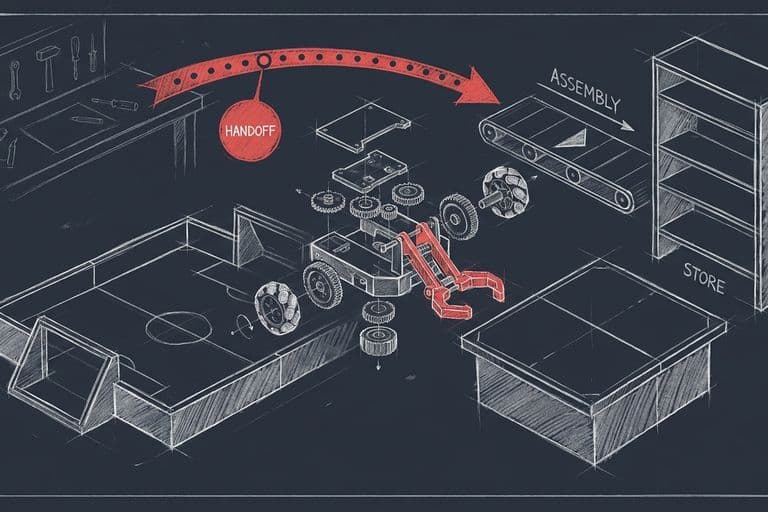
A lot of our early hires stayed because the work loop was tighter than anything they could get elsewhere. We did our drone production in-house from early on, and over time that capability grew into JFACTORY, the group's precision-manufacturing arm in Jasionka — CNC machining, fiber-laser cutting, 3D printing. For an engineer, that changes daily life completely. You design a part in the morning and you are holding the machined version in the afternoon. The feedback loop between an idea and a physical object collapses from weeks of outsourced back-and-forth to hours.
That loop is something neither a software-only startup nor a big outsourced supplier can offer. It is the difference between theorizing about a mechanism and iterating on it. Builders — actual builders — find that intoxicating, and it is not something a competitor can replicate by raising a bigger round. It comes from a deliberate choice to keep capability in-house even when buying it would have been cheaper in the short term. Vertical capability built locally is a product advantage and a recruiting-and-retention advantage at the same time.
In a small city, retention also benefits from simple math: the people who join you are not being poached every quarter by a dozen better-funded neighbors, because there aren't a dozen better-funded neighbors. The churn that defines coastal hubs barely exists. People stay long enough to get genuinely deep, and depth is what lets a small team punch far above its headcount.
The proof that it worked — and why external validation matters
You can claim your team is good. Nobody has to believe you. What changed the conversation for us was validation we did not control.
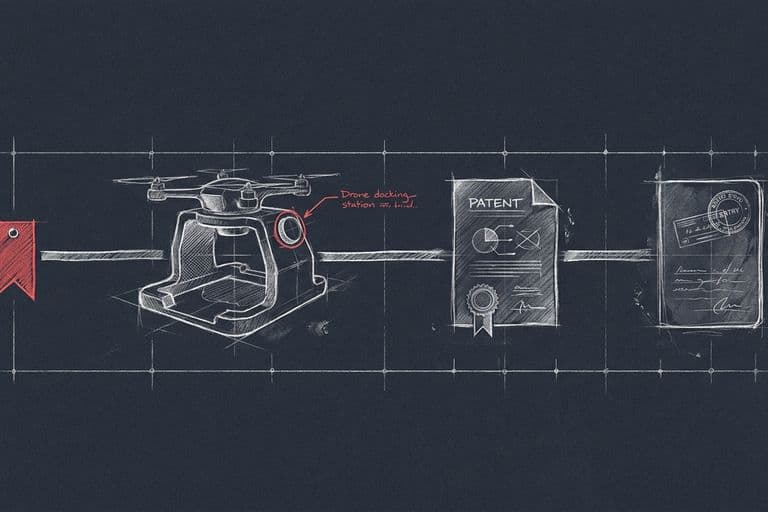
Cervi Robotics coordinated HUUVER, a Horizon 2020 project under grant agreement #870236, worth roughly EUR 1.62 million in total. "Coordinated" is the operative word. The EU did not just fund us as one partner among many — they accepted us as the entity capable of leading a multi-country research consortium. For a no-name startup from Rzeszow, getting through that evaluation was an external body certifying that the engineering team was real. That is the kind of signal you cannot manufacture, and it is worth far more than any award you give yourself.
The other validation came in words. Małgorzata Darowska, Poland's former Plenipotentiary for UAVs, put it on record: "Despite his young age, he built a company of genuinely talented engineers and brought real innovation to market." I quote it not for the compliment but for the precise phrase — a company of genuinely talented engineers. That was the asset. Someone in a position to know, who had no reason to flatter, named the team as the thing of value.
The point for any founder: chase third-party validation, not self-applied superlatives. A grant evaluation passed, a consortium led, an expert willing to put their name behind your team — these are the credibility signals that recruit the next engineer for you. They turn "trust me" into "trust them." Much of how we funded the underlying R&D, and how those non-dilutive wins compounded, I covered in How Grants and Accelerators Funded My Hardware Company. The hiring story and the funding story are the same story told from two angles.
What this means, and where I would start
If I were starting over today as an unknown founder in an unfashionable place — and I have written separately about what I would change in What I'd Tell Myself at 22 — here is the order I would work in.
First, stop trying to win on brand, salary, and city. You will lose, and pretending otherwise repels the exact people you want. Second, find the one thing your location is genuinely good at and become the most interesting employer for people with that specific skill — let the local cluster do your sourcing. Third, recruit on the problem, not the company: hand each early engineer a hard, concrete thing they fully own, and be honest about the stage. Fourth, build a tight design-to-reality loop — manufacturing, fast iteration, real ownership — so the people who join have a reason to stay. And fifth, go earn external validation early, because a single grant evaluation passed or a credible expert vouching for your team will recruit better than any pitch you could write.
None of this requires money you do not have. It requires being honest about your weaknesses and ruthless about your one real strength. We built a team good enough to lead a European research consortium out of a small Polish city, before anyone had heard of us. The constraints were not the obstacle. They were the filter that found the right people. If you want to talk through your own version of this, reach out — it is the part of the founder journey I find most worth getting right.
FAQ
- How do you hire good engineers with no brand, no big salary, and no coastal location?
- You sell the work, not the company. Hand a candidate a concrete, hard problem they will personally own, give them more responsibility than a corporate role would, and be honest about the constraints. The engineers worth hiring are filtered by the problem, not by your logo. Proximity to a relevant talent pool — for us, an aerospace region — does the rest.
- Why did being near the Aviation Valley cluster in Rzeszow matter for recruiting?
- The region around Rzeszow is built around aerospace, so it already produced people fluent in airframes, control systems, manufacturing, and certification. We were not competing with web startups for the same generalists. We were the unusual employer offering aerospace-adjacent people a chance to build autonomous systems end to end, which is rare in a region dominated by large suppliers.
- Doesn't a small city limit the talent pool too much?
- It limits volume, not ceiling. A university and an industrial cluster in the same city give you a steady inflow of strong people who are not being poached every quarter. Retention is far easier than in a coastal hub, and the people who join tend to stay long enough to get deep. We coordinated an EU Horizon consortium from there, which is the proof that the ceiling was high enough.
- What proof did you have that the team was actually good?
- External validation we did not control. Cervi Robotics coordinated HUUVER, a Horizon 2020 project (grant #870236), which means EU reviewers judged us capable of leading a multi-country research consortium. Poland's former Plenipotentiary for UAVs publicly said we had built 'a company of genuinely talented engineers.' Those are third-party signals, not our own marketing.
- How did building manufacturing in-house help with hiring?
- Our in-house drone production eventually became JFACTORY, a precision-manufacturing arm with CNC machining, fiber-laser cutting, and 3D printing in Jasionka. For engineers, that meant they could design a part in the morning and hold it in the afternoon. That tight loop between design and physical reality is something most software-only or outsourced shops cannot offer, and it is a genuine draw for builders.
- What is the single biggest mistake founders make recruiting their first engineers?
- Trying to compete on the dimensions where they are structurally weak — brand prestige, salary, and city. You will lose every one of those fights against a funded competitor. Compete instead on ownership, problem difficulty, and honesty about the stage. The right person hears 'no-name startup in a small city' as 'I will actually build something,' not as a downgrade.