I was born in Ukraine. I have spent close to a decade building autonomous drones — on the civilian, infrastructure side, the dual-use side, never as a weapons company. So when I watch what is happening in my home country, I am not reading it as news. I am reading it as the clearest live experiment we have ever had in how drones change the defense of a state.
Let me be precise about what this piece is and is not. It is about defending — sensing, protecting infrastructure, stopping hostile drones, keeping critical systems running under pressure. It is not a guide to offensive systems, and I won't write one. The lessons that matter most for the rest of us are defensive anyway.
Here is what I take from it.
1. The economics of defense inverted
The single biggest lesson is about cost. A drone that costs a few hundred or a few thousand dollars can now threaten an asset worth millions. That asymmetry rewrites the defender's problem. The question is no longer "do we have a powerful enough system?" It is "what does each intercept cost us, and can we afford to do it a thousand times?" Ukraine's answer has been the interceptor drone: it produced 100,000 of them in 2025, and its National Security and Defense Council says downing an attack drone this way costs more than 25 times less than firing a Western air-defense missile.
States built around a small number of exquisite, expensive platforms are structurally on the wrong side of that math. The ones adapting fastest are building cheap, layered, autonomous defenses — many modest systems working together — rather than betting everything on a handful of irreplaceable ones.
2. The spectrum is contested, so autonomy wins
In Ukraine, electronic warfare is everywhere. GPS jamming and spoofing are routine. A drone that depends on a clean satellite fix and a constant radio link is a drone an adversary can blind or take over.
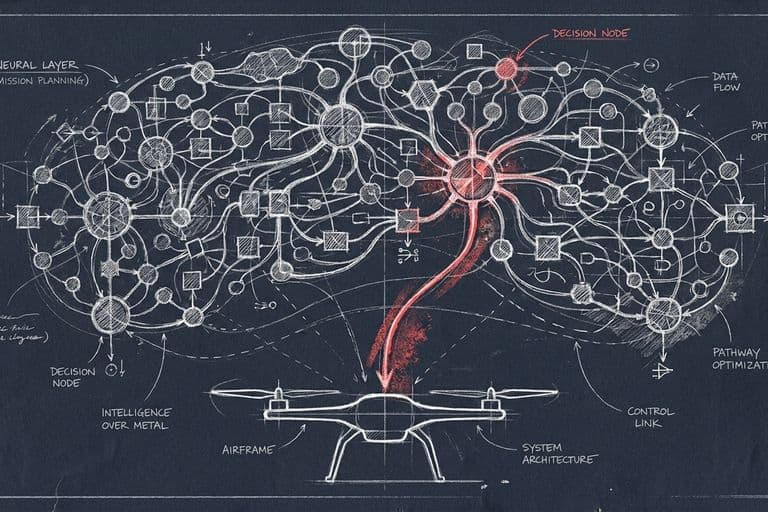
This is the lesson I feel most directly as a builder. For years, "autonomy" was a convenience feature — fly the mission without babysitting it. The war turned it into survival. If the link drops and the GPS lies, the drone has to navigate, decide, and finish the job on its own. That is why authenticated navigation matters: Galileo's OS-NMA service, operational since July 2025, makes spoofing far harder to get away with, and building a real platform around it — as we did in the Horizon 2020 HUUVER project — is no longer academic. Resilience to a contested spectrum is the whole game.
3. Counter-drone is half the picture
We spent years talking about what drones can do. Ukraine made the other half unavoidable: what do you do about the other side's drones?
Counter-UAS — detecting, tracking, and stopping hostile drones — is now a co-equal discipline. And the hard-won insight is that no single method works in every condition:
- Jamming is cheap and fast, but it does nothing against drones on fiber-optic links or fully onboard navigation, and it creates collateral spectrum problems of its own.
- Kinetic shoot-down works, but with missiles it is expensive — back to the cost-per-intercept problem, and the reason Ukraine turned to cheap interceptor drones.
- Physical capture — net interception and similar — fills the gap for protecting fixed, sensitive sites where you cannot flood the spectrum or fire freely.
A serious defense layers all three. I have seen the capture side up close: in AUDROS, a project backed by ESA and the EDA, a partner's net-capture drone was housed in our docking station and launched automatically on a cue from the detection system, and the consortium tested it in the Czech Republic in 2022.
4. Production sovereignty is a capability, not a logistics detail
Ukraine turned domestic drone production into a strategic asset — building at home, iterating in weeks, and steadily cutting its dependence on Chinese components. In 2024, 96% of the more than 1.5 million FPV drones its defence ministry bought came from Ukrainian makers. Attrition is won by whoever can do that.
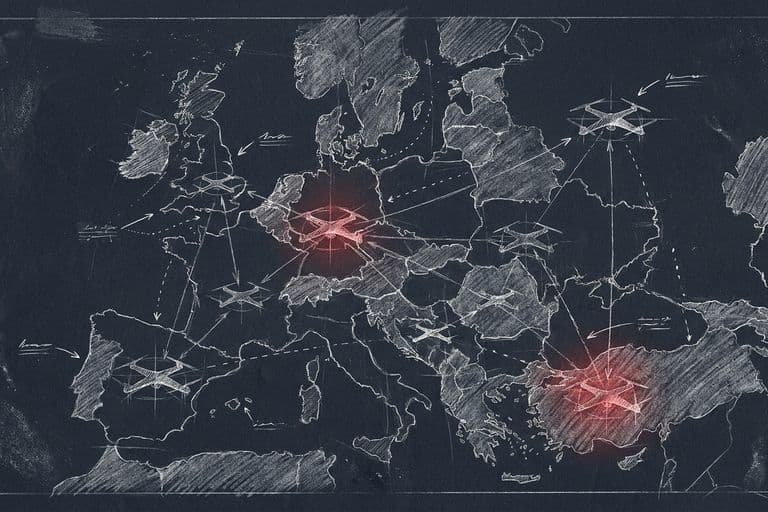
The peacetime version of this lesson is already written into procurement policy. The EU's European Defence Industrial Strategy (EDIS) invites member states to spend at least half of their defence procurement budgets within the EU by 2030, and Section 848 of the US FY2020 NDAA bars the Pentagon from buying or operating drones made in China or built with Chinese flight controllers, radios or cameras. Both push buyers toward allied, auditable, non-adversarial supply chains. That is not protectionism for its own sake — it is the recognition that a supply chain running through a potential adversary is a vulnerability you cannot patch in a crisis. Sovereign capacity is now part of the defense itself.
5. The advantage is the feedback loop
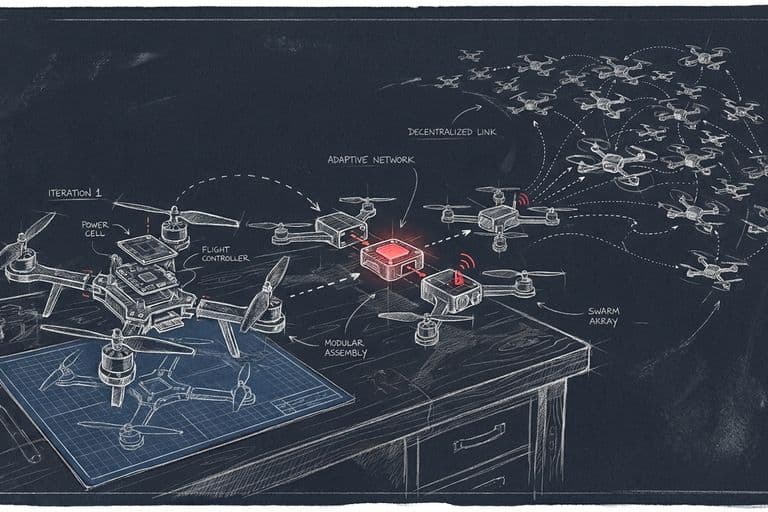
The platforms get the headlines. The real edge is the speed of the loop between the field and the workshop. The side that observes, modifies, and redeploys faster wins — even with simpler hardware. Software-defined behavior, over-the-air updates, and a culture of weekly iteration beat a beautiful airframe that takes two years to revise.
I have believed this my whole career, and the war has been a brutal confirmation. Build the loop, not just the product.
6. The home-front lesson — for states not at war
If your country is not on a front line, it is tempting to file all of this under "someone else's war." That is the mistake.
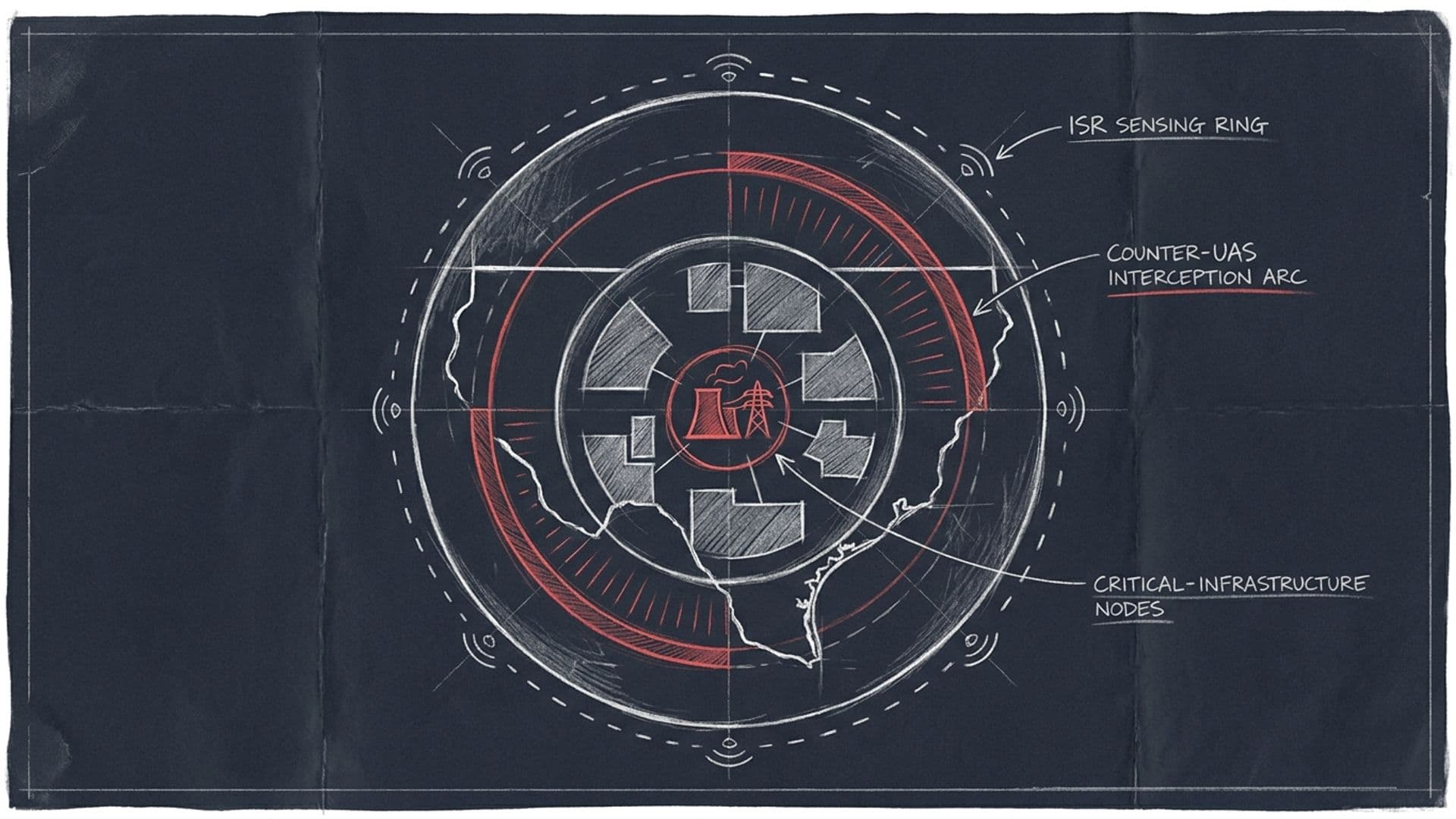
The surfaces a hostile drone can surveil or disrupt are the same ones every country already worries about: power grids, rail, refineries, ports, borders, stadiums, government sites. And the autonomy stack that is best at monitoring that infrastructure is the same one best positioned to help protect it. This is the dual-use reality, and it runs in both directions. The drone-in-a-box that inspects a refinery is one configuration change away from providing persistent watch over the same site.
That is the work I have chosen — the civilian, infrastructure side of a dual-use field — and I am deliberate about the line. Dual-use is not weapons. The goal is resilience: keeping the lights on, the rails safe, and the airspace over a sensitive site under control.
What I carry out of it
I did not need the war to tell me autonomy, resilient navigation, counter-drone capture, and sovereign manufacturing matter. But it removed any doubt about the order of priorities. Build for a contested spectrum. Assume the link will drop. Make the defensive layer affordable enough to use at scale. And build it somewhere you control, with a supply chain you can stand behind.
I'm Ukrainian. I build this in Poland, for Europe and the US, as dual-use infrastructure. Watching home has made me more certain, not less, that the defensible version of this technology — the one that protects people and the systems they depend on — is the one worth building.
Key facts
Cost-per-intercept is now the defender's core problem: Ukraine produced 100,000 interceptor drones in 2025, and its National Security and Defense Council says downing a Shahed-type drone with one costs more than 25 times less than using a Western air-defense missile.
Source · National Security and Defense Council of Ukraine, Jan 26, 2026 (https://www.rnbo.gov.ua/en/Diialnist/7375.html)
Electronic warfare is pervasive in Ukraine: large-scale GPS jamming has forced operators toward inertial and other GPS-independent navigation, and toward onboard autonomy that keeps working when communications degrade.
Source · CSIS, May 2, 2025 (https://www.csis.org/analysis/lessons-ukraine-conflict-modern-warfare-age-autonomy-information-and-resilience)
Counter-drone defense in Ukraine is layered, with interceptor drones now one of the key elements of multi-layered air defense, because no single method works everywhere; fiber-optic drones, for example, cannot be jammed.
Source · National Security and Defense Council of Ukraine, Jan 26, 2026 (https://www.rnbo.gov.ua/en/Diialnist/7375.html); RUSI, 'Drones: Decoupling Supply Chains from China', Nov 2025 (https://static.rusi.org/rp-drone-supply-chains-china-nov-2025.pdf)
Ukraine turned domestic drone production into a strategic asset: its defence ministry bought more than 1.5 million FPV drones in 2024, 96% of them from Ukrainian makers, and expected about 3 million FPV drones to reach the armed forces in 2025.
Source · Reuters, Mar 10, 2025 (https://www.reuters.com/business/aerospace-defense/ukraine-sharply-raise-purchases-home-produced-fpv-drones-2025-2025-03-10/); Kyiv Independent, Dec 24, 2025 (https://kyivindependent.com/ukraine-on-track-to-receive-total-of-3-million-fpv-drones-in-2025/)
Galileo's OSNMA authentication service, declared operational on 24 July 2025, makes GNSS spoofing significantly harder (it does not stop jamming); Dronehub's Horizon 2020 HUUVER project designed its hybrid UAV-UGV around Galileo, with OSNMA to authenticate its positioning.
Source · EUSPA, Jul 22, 2025 (https://www.euspa.europa.eu/pressroom/press-releases/galileo-be-first-gnss-offer-authentication-service-worldwide-launch-osnma); European Commission, Aug 25, 2025 (https://defence-industry-space.ec.europa.eu/galileos-osnma-authentication-service-now-operational-2025-08-25_en); CORDIS, HUUVER grant 870236 (https://cordis.europa.eu/project/id/870236)
I am a Ukrainian-born founder; the company I built, Dronehub, is based in Poland's Aviation Valley and builds dual-use autonomous drone infrastructure — not weapons — with R&D backed by ESA, EDA and Horizon 2020 programmes.
Source · Author; CORDIS, HUUVER (https://cordis.europa.eu/project/id/870236); ESA Business Applications, AUDROS (https://business.esa.int/projects/audros)
FAQ
- What is the biggest lesson Ukraine offers about defending a state with drones?
- That the economics of defense inverted. A drone costing a few hundred to a few thousand dollars can threaten an asset worth millions, so the defender's hardest problem is now cost-per-intercept, not raw capability. The states that adapt fastest are the ones building cheap, layered, autonomous defenses rather than relying only on a handful of exquisite, expensive systems.
- Why does electronic warfare push drones toward autonomy?
- Because if your drone depends on a constant GPS fix and a radio link, an adversary who jams or spoofs the spectrum can blind or hijack it. Ukraine made that a daily reality. The response is autonomy: onboard navigation that survives GPS denial, and authenticated signals like Galileo OS-NMA that make spoofing much harder to pull off. Resilience to a contested spectrum stopped being a feature and became survival.
- Is counter-drone defense more important than offensive drones?
- For most states, the more urgent gap is defensive. Ukraine showed that counter-UAS — detecting, tracking, and stopping hostile drones — is now a co-equal discipline, and that no single method is enough. Jamming does nothing against drones on fiber-optic links or fully onboard navigation, and it creates collateral spectrum problems; shooting drones down with missiles is expensive, which is why Ukraine turned to cheap interceptor drones; physical capture, like net interception, fills the gap for protecting fixed, sensitive sites. A serious defense layers all three.
- What can countries that are not at war learn from this?
- That the same lessons apply to protecting critical infrastructure in peacetime. Power grids, rail networks, refineries, ports, and borders are exactly the surfaces a hostile drone can surveil or disrupt — and they are also exactly what autonomous drones are best at monitoring and guarding. The dual-use cuts both ways: the autonomy stack that inspects a refinery is the same one that can help protect it.
- Why does sovereign drone production matter for defense?
- Because attrition is won by whoever can build at home, iterate weekly, and not depend on an adversary's supply chain. Ukraine turned domestic production into a strategic capability. The peacetime version of that lesson is policy like the EU's European Defence Industrial Strategy (EDIS) and Section 848 of the US FY2020 NDAA: states are deliberately steering toward allied, auditable, non-adversarial supply chains. Sovereign capacity is now a defense asset in itself.
- How does dual-use technology fit into defending a state?
- Most of the technology that defends infrastructure is dual-use by nature — the same autonomous inspection, navigation, and counter-drone systems serve civilian and security needs. I build on the civilian-infrastructure side deliberately, and I am clear about the line: dual-use is not weapons. The point is resilience — keeping the lights on, the rails safe, and the airspace over a sensitive site under control.